Kenya has launched its National Pesticide Residue Monitoring Framework (NPRMF), marking a significant step towards strengthening food safety, protecting public health and enhancing the competitiveness of the country’s agricultural sector.
The framework provides a structured national system for generating, analysing and sharing pesticide residue data. The information gathered will support regulatory oversight, improve food safety assurance, protect consumers and help maintain access to domestic and international markets.
The initiative received technical support from the CABI-led PlantwisePlus programme through its Pesticide Risk Reduction pathway. CABI worked in partnership with a multisectoral team – which includes the Pest Control Products Board (PCPB), Kenya Plant Health Inspectorate Service (KEPHIS), and the Agriculture Food Authority-Horticulture crops Directorate (AFA-HCD), Ministry of Health- Kenya National Public Health Institute -Division of Food Safety. Other partners included aaK-GROW, The Retail Trade Association of Kenya (RETRAK), Bureau Veritas (BVKL), Fresh Produce Consortium of Kenya (FPCK), Fresh Produce Exporters Association of Kenya (FPEAK), COLEAD, Jomo Kenyatta University of Agriculture and Technology, and the county governments of Nyeri, Nandi, Makueni, Nyandarua, Mombasa and Meru. Together, the partners developed and piloted the NPRMF in Kenya.
‘Food control is multisectoral’
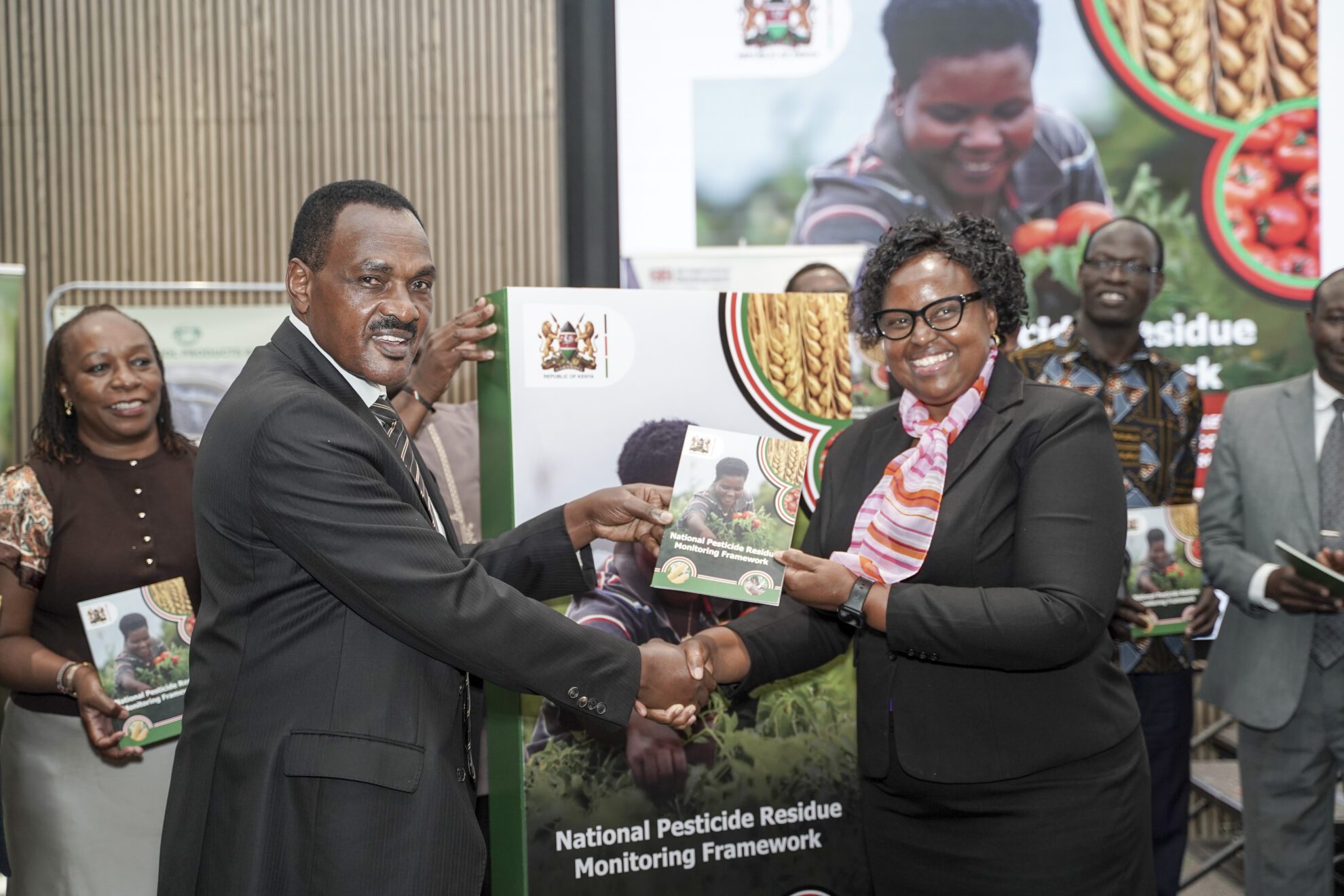
Agriculture Secretary James Wanjohi from the Ministry of Agriculture and Livestock Development presents a copy of the framework to Grace Muchemi, General Manager Analytical Services department at PCPB
Speaking during the launch, Agriculture Secretary James Wanjohi from the Ministry of Agriculture and Livestock Development highlighted the importance of collaboration in ensuring food safety across the value chain.He said: “Food control is multisectoral. This forum reminds us of the importance of working together to ensure food safety from farm to fork.”
Mr Wanjohi added that while pesticides play a vital role in managing pests and diseases that threaten agricultural production, their use must be carefully regulated and guided by Good Agricultural Practice (GAP).
Strengthening food safety through partnership
Dr Daniel Karanja, Regional Director for Africa at CABI, said through initiatives such as PlantwisePlus, CABI has been working with its Member Countries, Kenya being one of them, on initiatives that aim to improve people’s lives, protect our environment and conserve biodiversity.
“Our contribution has been guided by our commitment to improving agricultural systems, food safety and sustainable crop production across Africa and beyond. Let us view this launch not as the end of a process, but as the beginning of a new chapter in strengthening food safety systems in Kenya.”
“Together, we have developed a shared framework. Together, we must now implement it. And together, we can build a safer, healthier and more competitive agricultural sector for Kenya.”
He also thanked TradeMark Africa represented by Dr Andrew Edewa Director, Standards and SPS Measures , for supporting the development of the Standard Operating Procedures that will help operationalise the framework.
Framework built through extensive stakeholder collaboration

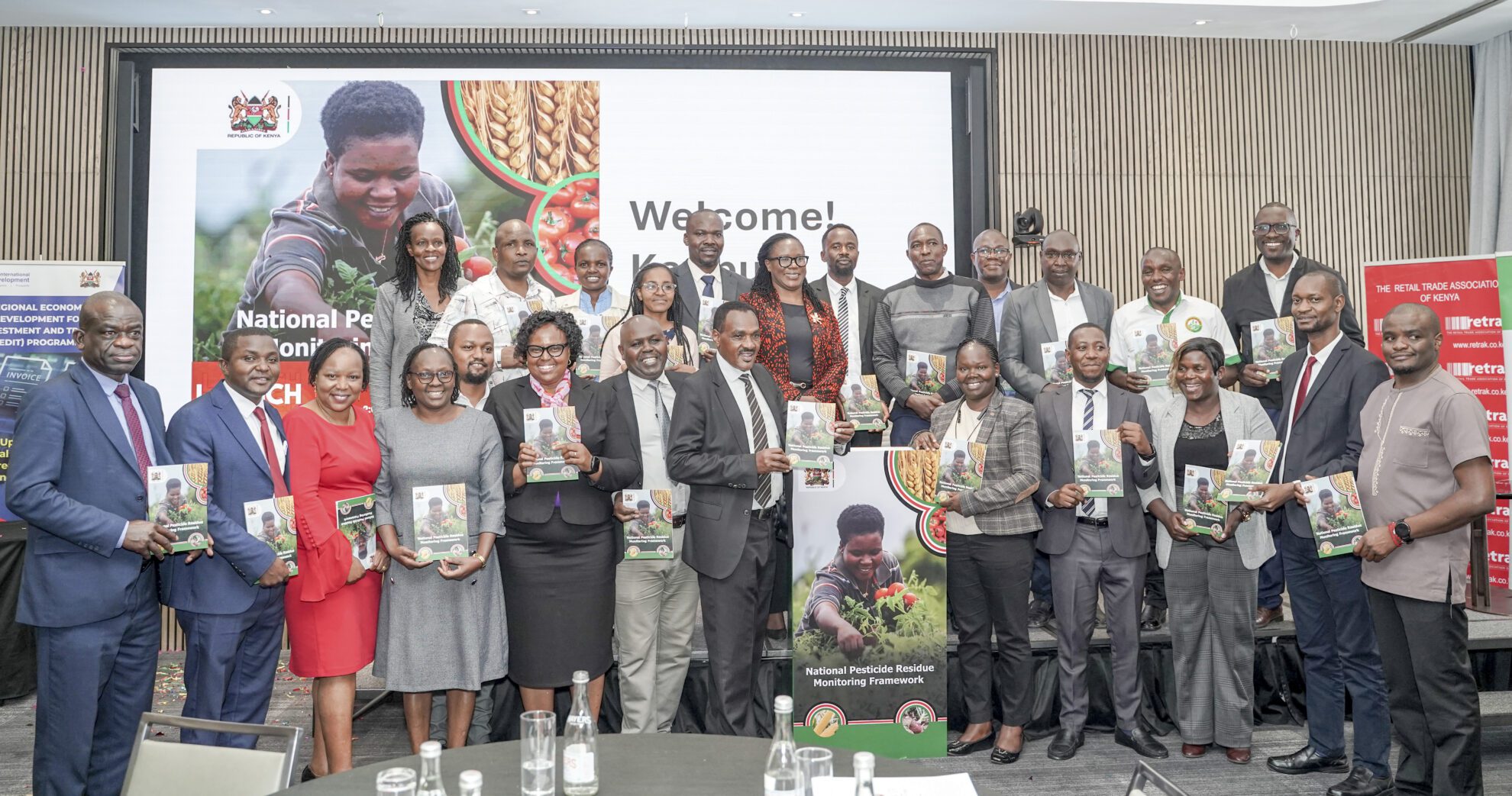
Stakeholders who played a key role in developing Kenya’s National Pesticide Residue Monitoring Framework (NPRMF) celebrate the framework’s official launch in Nairobi on 15th October 2026
The launch marks the culmination of more than two years of consultation, technical review and stakeholder engagement involving public institutions, laboratories, farmer organizations, exporters, retailers, and development partners. The development process also included reviews of international best practice and assessments of pesticide residue monitoring systems in countries including the United States, China and India.
In 2024, PlantwisePlus supported discussions on the need for a national mechanism to coordinate pesticide residue monitoring in Kenya. Later that year, a national writeshop brought together experts from key government institutions, laboratories, academia, development organisations and industry to draft the framework and establish a shared vision for its implementation. The writeshop team benefitted from technical guidance by Dr Reddy Shanker, former USDA Agricultural Marketing Service, Science and Technology Program Monitoring Programs Division – Pesticide Data Program (PDP), USDA (AMS S&T MPD PDP). Momentum continued throughout 2025, as stakeholders worked towards greater collaboration and consensus on roles, responsibilities and implementation mechanisms for a national residue monitoring system.
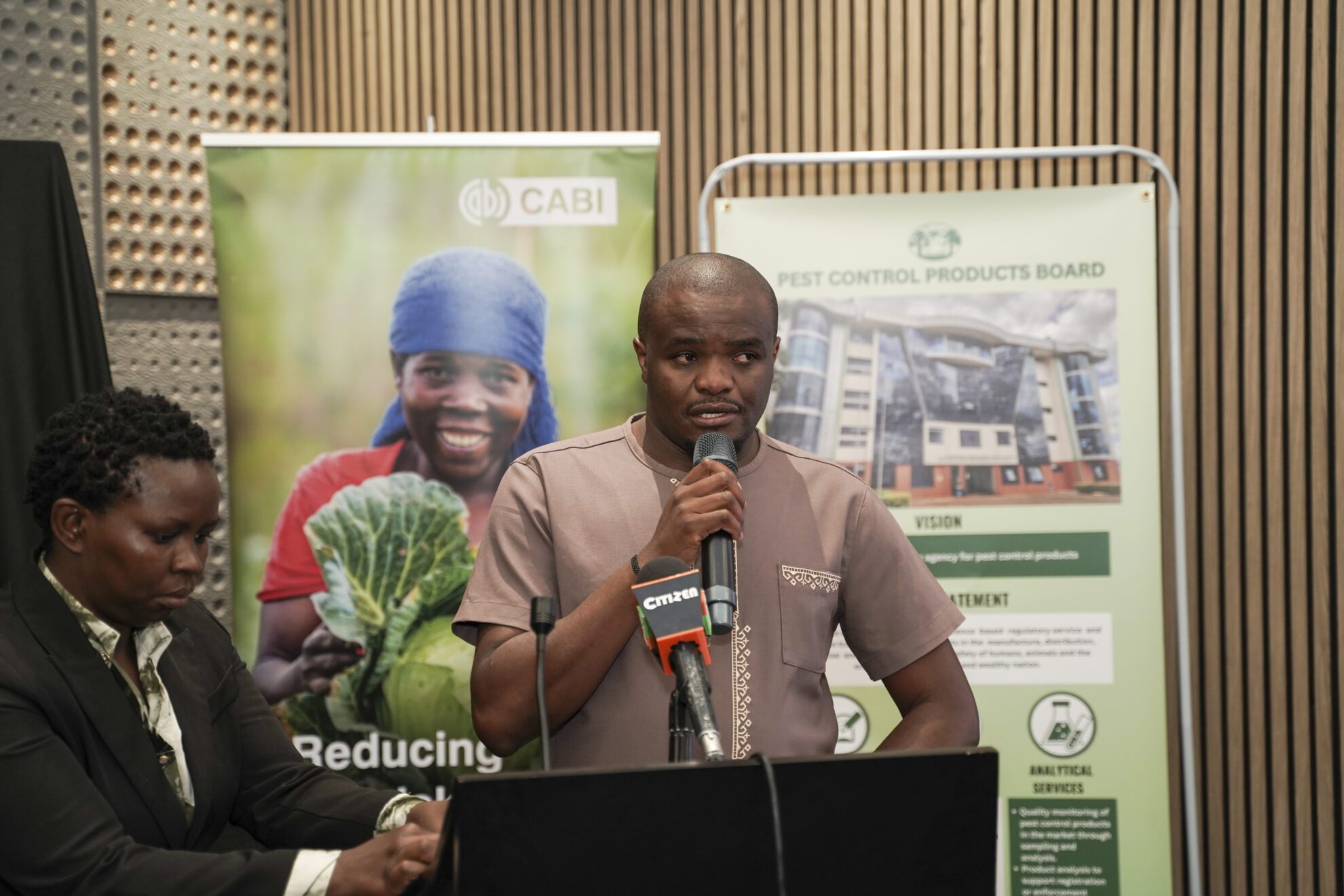
Dr Naphis Bitange, CABI Scientist and Systems Agronomist, addresses stakeholders during the launch of Kenya’s National Pesticide Residue Monitoring Framework (NPRMF) in Nairobi.
Pilot tested in five agricultural counties
To test the practicality and operational effectiveness of the framework, the stakeholders also conducted a pilot between May and June 2025 in Kirinyaga, Kiambu, Kajiado, Narok and Taita Taveta. Lessons from the five key agricultural counties informed the final framework and accompanying implementation procedures.
Dr Naphis Bitange, Scientist and Systems Agronomist at CABI, said the process created stronger links between agencies responsible for food safety, public health, pesticide regulation, agricultural production and trade.
He said: “Developing the framework through a collaborative process ensured that institutions were not working in isolation. The result is a shared system that supports better coordination, stronger evidence generation and more effective decision-making.”
A milestone for safer and more sustainable agriculture
CABI Senior scientist, Sanitary and Phytosanitary, Dr MaryLucy Oronje noted: “This framework will contribute to increased confidence in Kenyan agricultural produce by strengthening food safety assurances for domestic consumers, traders and export markets.”
Dr Melanie Bateman, CABI’s Global Lead on Synthetic Pesticides, said: “While ensuring safe food, market access and compliance with pesticide regulations is an ongoing journey, the launch of this framework marks a significant milestone. Reducing pesticide risks is an urgent global challenge, and this launch shows coordinated action can deliver meaningful results.”
Following this successful launch, CABI and stakeholders are calling upon the national governments and their agencies, and the development partners, to support pesticide monitoring and data-sharing events to strengthen multisectoral collaboration and efforts to enhance the food safety system for domestic and international markets.
Additional information
Main image: Stakeholders who played a key role in developing Kenya’s National Pesticide Residue Monitoring Framework (NPRMF) celebrate the framework’s official launch in Nairobi on 15th October 2026marking a milestone in strengthening food safety systems and pesticide residue monitoring in the country.
Relevant links
- PlantwisePlus is supporting the development of a national pesticide residue monitoring framework for Kenya
- Kenya stakeholders move towards greater coordination and collaboration on National Pesticide Residue monitoring
- Writeshop to draft National Pesticide Residue Monitoring Framework for Kenya
Related News & Blogs