CABI’s unique expertise and global presence around the world allows us to communicate the agricultural knowledge that smallholders need to make lasting change and improve their livelihoods
The challenge
Knowledge and information can help address global challenges like hunger and poverty, but a disconnect often exists between the solutions to global problems and the millions of people living in poor and vulnerable rural communities who need them most.
Development communication and extension (advisory services) are important instruments for encouraging dialogue about science-based farming solutions with communities, helping to stimulate agricultural production. However, they are often under resourced.


Providing solutions
We use our on-the-ground expertise in development communications and agricultural extension to help smallholder farmers apply tried and tested agricultural practices that improve their yields. We work with a range of approaches – from SMS messaging to village-based video screenings and ‘demonstration’ plots to communicate in the most effective way.
We are in a unique position to link research outputs with community realities. We analyse and help remove the barriers that exist between knowledge and how farmers use it. We work closely with our donors and partners to understand and minimize the hurdles that hinder communication.
This requires a deep understanding of the science behind the technologies we are transferring to new users; the capacity to find, appraise and use evidence, and the skills to communicate with both specialist and non-specialist audiences.
Our development communication and extension expertise in more detail
Approaches to communicating with smallholder farmers can be overly-simplistic. CABI specializes in curating and transforming content to make it more digestible and understandable to farmers, which, in turn, helps them make decisions about their farming practices.
We support agricultural extension services with programmes such as Plantwise and tools such as capacity building. Through this, we build engagement and ownership, which leads to long-term, positive change.
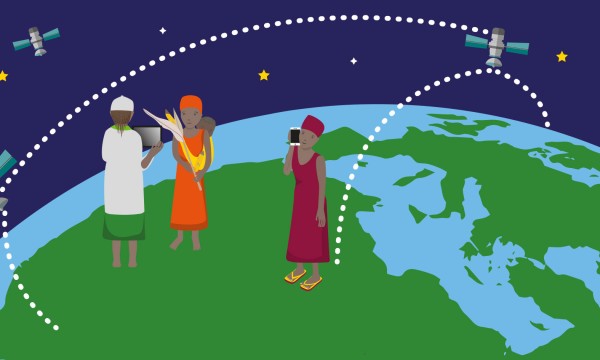
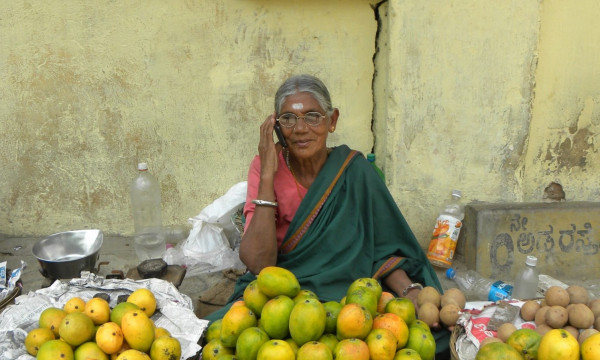
Technology is an important part of the uptake and adoption process. We combine our understanding of development communication and digital development to reach millions of farmers using mobile phones, radio and video.
Lead contact
For more information and enquiries about our expertise in development communication and extension, please get in touch.

Dannie Romney
Senior Global Director, Development Communication and Extension
T: +254 20 72 24450 E: d.romney@cabi.org
Stories of Impact
Read about the variety of work CABI delivers, and the difference we make

Related Projects
Explore our recent projects from around the world
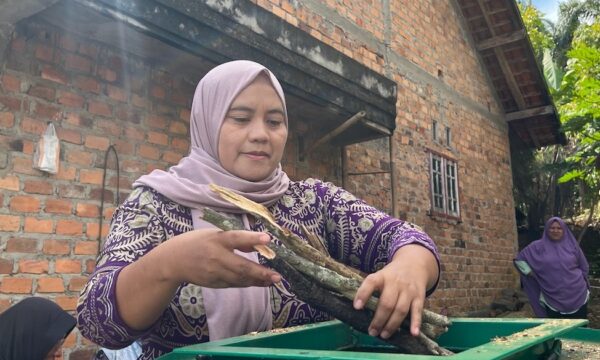
Building climate-resilient coffee farming in Indonesia
Supported by the Asian Development Bank, CABI is working with ICCRI, Louis Dreyfus Company and the University of Lampung to strengthen 50 coffee farmer groups. So far, 100 Farmer Group Educators have been trained (47% of them women), and 19 biochar kilns are producing over 1,000 kg of biochar a month.
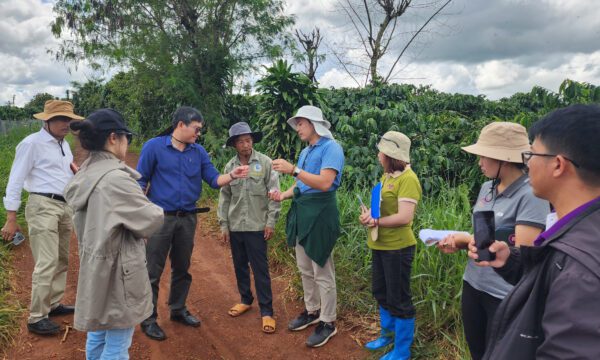
Inclusive, sustainable coffee value chain in Vietnam
CABI and its partners helped smallholder coffee farmers in Vietnam’s Central Highlands adopt sustainable, climate-smart practices. Through training, demonstration plots and digital advisory services, the project improved yields while cutting fertiliser and water use.

Harnessing nature’s microbes: sustainable agricultural solutions for sub-Saharan Africa
Agriculture is a vital sector in sub-Saharan Africa (SSA). It contributes an average of 25% to the gross domestic product and provides sustenance for nearly 80% of the rural population. However, the region remains the most food insecure globally. Increasing agricultural productivity is the primary objective for SSA, but this goal is partly hindered by low crop yields caused by pests and declining soil productivity. Although several solutions are available, many prove ineffective against various challenges, particularly soil ones. They also pose many difficulties regarding their impact – biodiversity loss, food safety and soil productivity – all stemming from excessive use and unregulated application. These challenges can be addressed by developing low-risk and alternative products based on nature-based solutions that utilize beneficial soil microorganisms. CABI is collaborating with partners to increase the use of nature-based solutions in agrifood systems in SSA.
Featured Publications
Papers and other publications that we hope you find enlightening


Reducing pesticide risks through social and behavior change communication: a case study of the Ukulima True campaign in Kenya
DOI https://doi.org/10.3389/fsufs.2025.1627249
Type Journal article
Published in Front. Sustain. Food Syst. 9:1627249
Language English
Year 2025