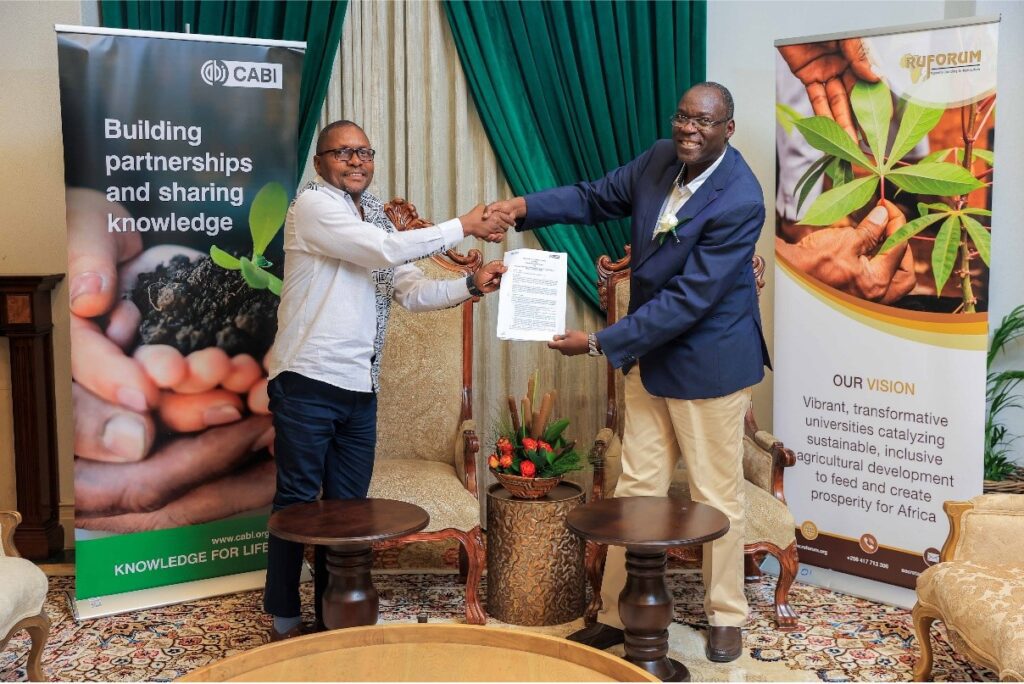
A new strategic partnership between CABI and the Regional Universities Forum for Capacity Building in Agriculture (RUFORUM) is set to redefine agricultural education and research across Africa, with far-reaching implications for food security, climate resilience, and youth employment.
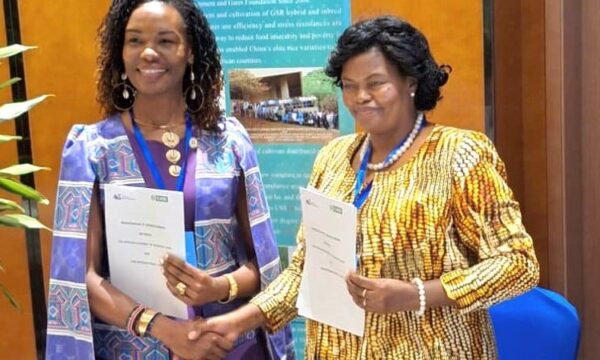
While the signing of the Memorandum of Understanding (MoU) at RUFORUM’s 21st Annual General Meeting (AGM) marks a formal beginning, the real story lies in what this collaboration will deliver: a stronger pipeline of skilled professionals, innovative learning platforms, and coordinated research to tackle Africa’s most pressing agricultural challenges.
Why it matters
Africa faces mounting threats from invasive species, climate change, and food insecurity. Universities play a critical role in equipping the next generation of scientists and innovators to address these challenges.
This partnership leverages RUFORUM’s network of 175 universities in 40 countries and CABI’s global expertise in plant health, digital tools, and sustainable farming.
“This partnership is about more than collaboration. It is about creating a unified approach to agricultural education and research that accelerates Africa’s progress toward food security and climate resilience,” said Dr Morris Akiri, CABI’s Senior Regional Director, during the MoU signing with RUFORUM.
What will change
The agreement opens doors for joint development of e-learning platforms, experiential learning opportunities, and co-designed curricula in critical areas such as plant health, biodiversity protection, and sustainable farming.
This means African universities will gain access to CABI’s global expertise and digital tools, enabling students and researchers to gain cutting-edge knowledge to address pressing agricultural challenges.
Programmes like CABI’s PlantwisePlus, which has already trained thousands of young people in pest management and sustainable practices, will now reach even more learners through this alliance.
The collaboration also aims to mobilize resources for projects that strengthen climate resilience, improve food systems, and promote youth engagement in agribusiness.
Professor Patrick Okore, RUFORUM’s Executive Secretary, emphasized: “Our universities are at the heart of Africa’s development. By partnering with CABI, we are equipping students and researchers with practical skills and global knowledge to solve real-world challenges in agriculture.”
Voices from the panel
During the AGM, CABI also showcased its work in agriculture and development, youth-focused initiatives, and digital tools that enhance learning and capacity-building for young people and academic institutions.
CABI’s Dr Morris Akiri, attended alongside Dr Joseph Mulema, Senior Scientist, and Mr Kevin Muraguri, Agri-Digital Tools Communications Coordinator, through presentations, a panel discussion, and an exhibition booth.
CABI’s digital tools and PlantwisePlus programme, which has reached over 7 million young people in Africa, training them in plant health diagnosis, safe pesticide use, and sustainable pest management.
Dr Akiri participated in a high-level dialogue on Africa–Europe partnerships in higher agricultural education, science, and technology, chaired by Professor Barnabas Nawangwe, Vice Chancellor of Makerere University. The session explored policies and action plans to strengthen research and science capacity through strategic partnerships, featuring a lead paper by Dr Leonard Mizzi from the European Commission.
“Stakeholders must collaborate closely and avoid duplication of efforts, which often results in low and slow impact on agricultural development,” Dr Akiri urged.
“Coordinated partnerships will maximize resources, streamline initiatives like PlantwisePlus and Horizon Europe, and accelerate human capital development for resilient agri-food systems.”
He emphasized that this approach would ensure progress toward shared goals such as training PhD scientists and advancing science, technology, and innovation agendas under AU Agenda 2063.
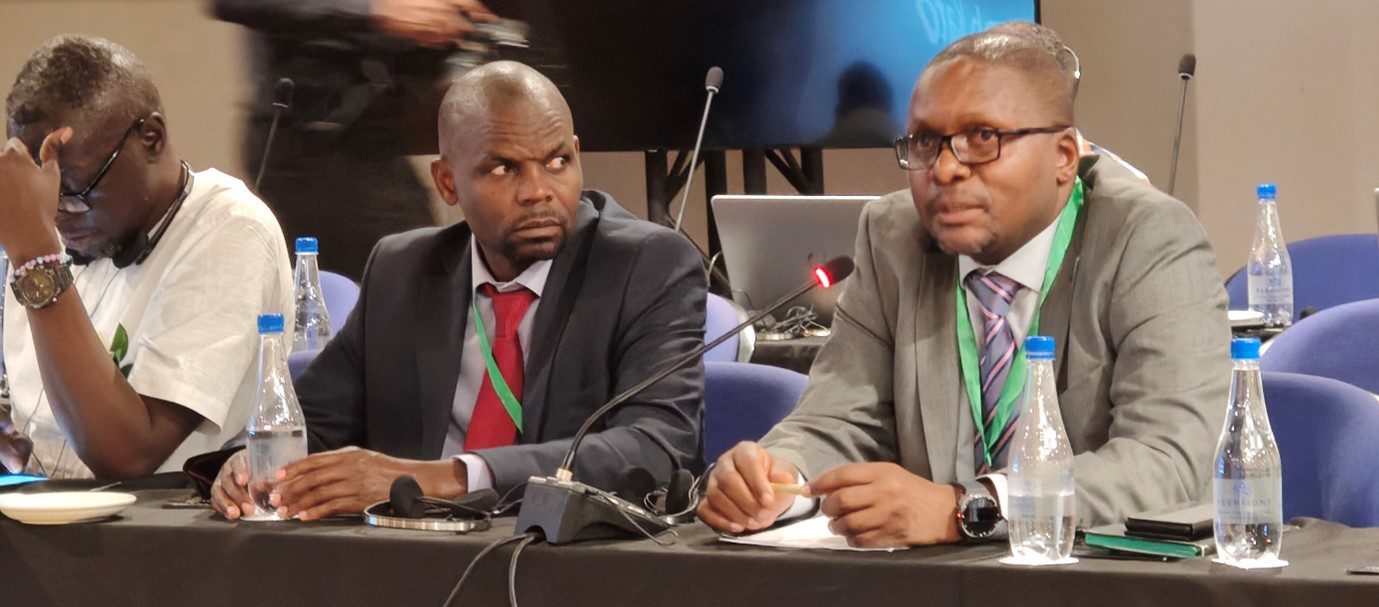
CABI’s Dr Morris Akiri and Dr Joseph Mulema at the panel discussion at the RUFORUM AGM side event on 8th December 2025 (CABI)
Mr Kevin Muraguri, noted:
“Digital tools and youth empowerment are central to building resilient food systems. The partnership between CABI and RUFORUM will scale these efforts across more universities and communities.”
Securing Africa’s agriculture against biological threats
Dr Joseph Mulema presented CABI’s strategies for protecting Africa’s agriculture from invasive alien species and endemic biological threats during a plenary session. His presentation outlined the multiple pathways through which invasives enter countries including global trade, travel, natural dispersal, and human activities such ornamental plant releases, often exacerbated by weak border biosecurity.
He warned of the severe consequences:
“Invasive species reduce crop yields, cause biodiversity loss, disrupt trade, and lead to high control costs,” Dr Mulema explained.
CABI advocates prevention through risk assessments, border controls, and surveillance by National Plant Protection Organisations (NPPOs), alongside rapid eradication, containment, biological controls, and digital diagnostics, while urging academia to support invasion biology training, NPPO collaborations, and research on pathways and nature-based solutions
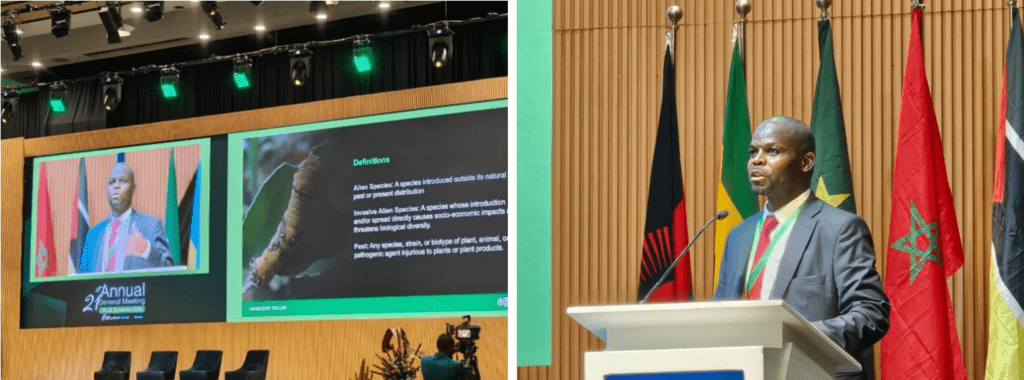
CABI’s Dr Joseph Mulema making a presentation “Securing Africa’s Agriculture against Invasive and Endemic Biological Threats” at the RUFORUM AGM plenary on 10th December 2025. (CABI)
Building deeper institutional collaborations
During the same AGM, CABI held a separate side meeting with Makerere University’s College of Agricultural and Environmental Sciences (CAES) to explore a university-wide collaborative MoU focused on capacity building. This initiative aims to strengthen institutional partnerships and enhance research and training programmes.
“CABI has extensive resources available through the CABI Digital Library, including high-quality research publications and practical training modules that are freely accessible to universities in Member Countries. These platforms offer significant opportunities for curriculum integration, student training, and research enhancement,” said Dr Morris Akiri during the meeting.
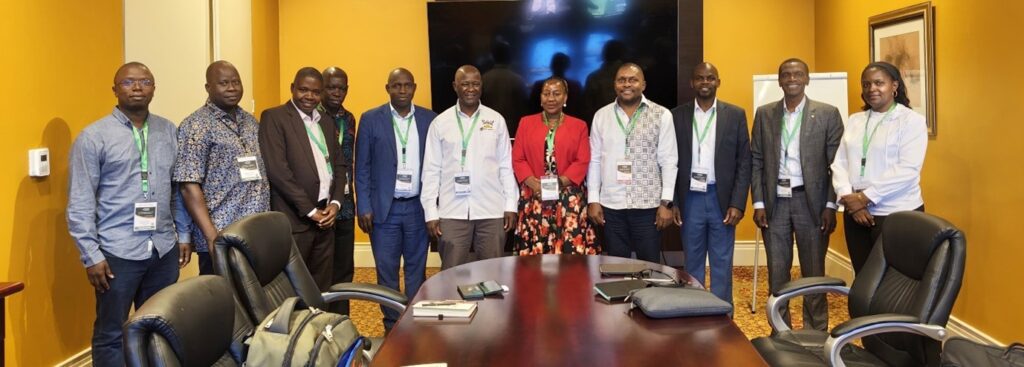
CABI’s team holds a meeting with CAES members during the sidelines of the RUFORUM AGM.
CAES members acknowledged the substantial benefits the college has already received from CABI, particularly through access to CABI’s digital publications, datasets, and the Plant Doctor programme, which has enhanced practical training in plant health management for students.
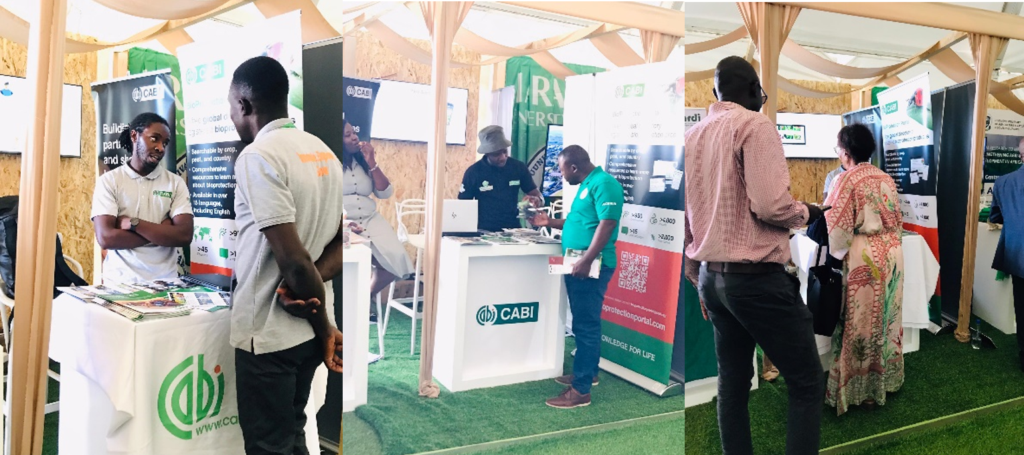
CABI’s Kevin Muraguri at the RUFORUM AGM exhibition grounds between 8th and 11th December 2025 (CABI)
Additional information
Main image: CABI’s Senior Regional Director Dr Morris Akiri and RUFORUM’s Executive Secretary Professor Patrick Okore during the signing of the MoU at the Gaborone International Conference Centre (GICC)in Gaborone, Botswana. (Photo credit: RUFORUM)
Related News & Blogs