Invasive plants commonly used as hedges in eastern Africa may be driving biological invasions, according to new research. Invasive species cost Africa’s agricultural sector an estimated USD $65.58 billion each year. They reduce land available for farming and grazing, threatening food security and livelihoods across the continent. Effective management is critical for millions of people living in rural communities.
The study’s findings suggest that invasive plants used as hedges may aid the plants’ spread. Surveys across rural and peri-urban eastern Africa found that most hedge plants were non-native. Moreover, of the 54 commonly recorded hedge species, nearly three-quarters were invasive. In addition, several counted as some of the region’s worst invaders. These included lantana (Lantana camara) and Mexican sunflower (Tithonia diversifolia). Simply put, eastern Africa’s hedges could be helping to drive plant invasions. Subsequently, they may be negatively impacting a host of issues from ecosystem health to farmer incomes.
Why are invasive plants being used as hedges?
Dr Arne Witt, the senior author of the research paper published in the African Journal of Ecology said, people have transported plant species around the world for centuries for use in gardens, landscaping, and ornamental horticulture. Several of these introductions have contributed to the spread of invasive plants.
“Introduced beyond their native range and free from natural enemies, some species thrive and outcompete native vegetation. Repeated introductions and widespread planting have likely accelerated the spread of invasive species across the region. The consequences for biodiversity can be severe. Impacts can extend to agricultural production, ecosystem services, and animal and human health,” Dr Witt added
Worryingly, the traits that make these plants desirable as hedges are also the ones that make them difficult to control. The ideal hedge is dense, fast-growing, and long-lived. It is easy to cultivate and tolerates a wide range of environmental conditions. Moreover, it is often resistant to pests and diseases and responds well to pruning. In addition, resistance to animal browsing can be an important trait of invasive hedges. Most of the popular species used in hedges in eastern Africa have some form of resistance to browsing. This includes prickles, spines, and thorns. Many invasive plant species in eastern Africa, and elsewhere in the world, have exactly these traits. This makes them great for hedges, but also aggressive and formidable invasive plants.
What results did the study reveal?
During the study, scientists recorded non-native plant species in roadside surveys in Ethiopia, Kenya, Rwanda, Tanzania, and Uganda. Of the 54 species recorded, over 80% were not native to Africa. Indeed, most were native to Tropical America. Moreover, more than 70% were invasive. This means they have taken over areas of land to the detriment of native species, livestock and crop production and even human and animal health.
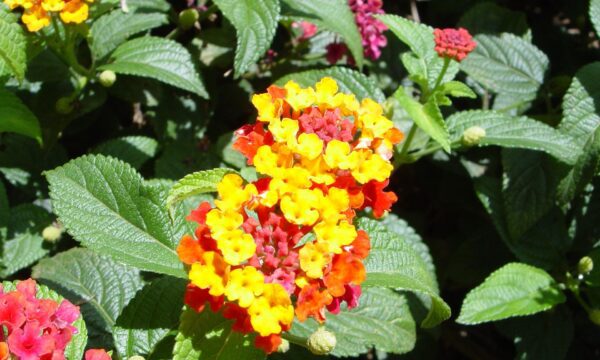
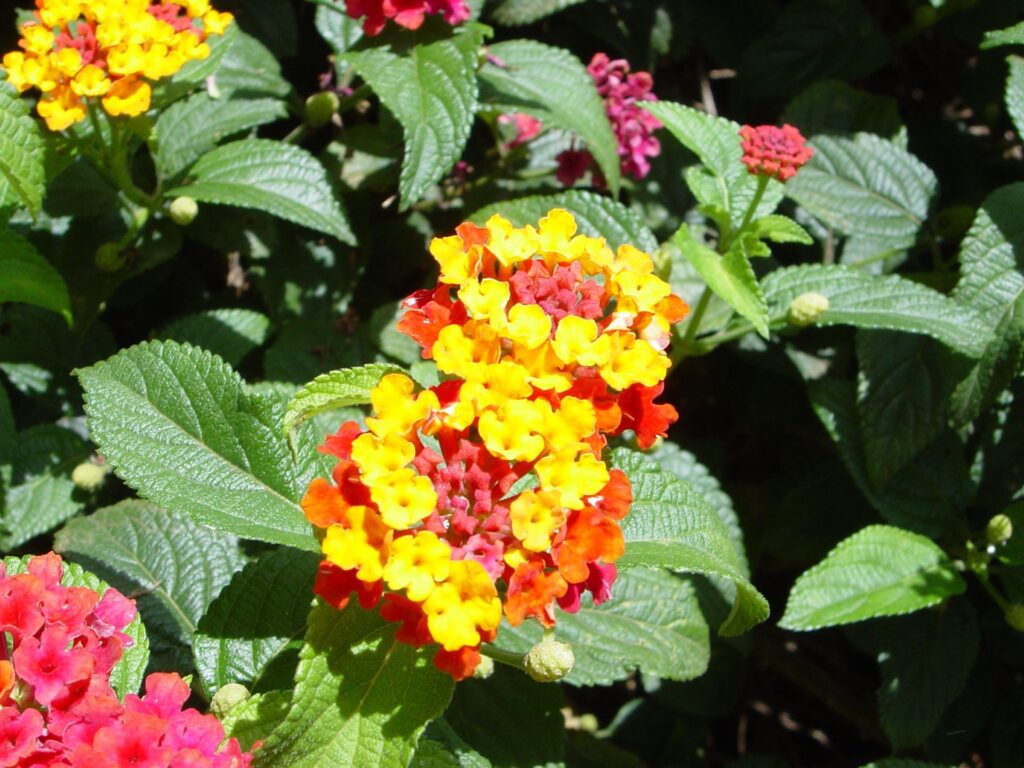
Lantana camara has a large native distribution and is present in 40 countries in Africa. As such, it is likely to be well adapted to grow in a wide range of climates and environments. Lantana is a problematic invasive species in Africa, and it is widespread. It crowds out agricultural and grazing land, is toxic to humans and animals, and very difficult to remove manually or chemically.
Other invasive hedge species included:
- ● Mexican sunflower (Tithonia diversifolia)
- ● Prickly pear cactus (Opuntia ficus-indica)
- ● Mysore thorn (Caesalpinia decapetala)
- ● Sisal (Agave sisalana)
- ● Eve’s needle cactus (Austrocylindropuntia subulata)
- ● Yellow oleander (Cascabela thevetia)
- ● Kei apple (Dovyalis afra)
How can we manage invasive hedges and safeguard ecosystems?
The plant species grown in hedges are now widespread throughout rural eastern Africa and are likely to spread further. People grow all eight of the most frequently used non-native hedge plants from cuttings, plantlets or cladodes. Most of the seeds from invasive hedges in eastern Africa are dispersed by animals, especially birds. Species capable of autonomous seed production are more likely to become invasive, since they are not reliant on pollinators.
Managing plant invasions in eastern Africa is critical for protecting rural livelihoods. However, addressing the source of these invasions is paramount to success. This includes understanding the role that hedges play. Promoting the use of native species such as Euphorbia tirucalli, E. ingens, Draceana afromontana, Artemisia afra, Aloe spp., Buddleja polystachya, Justicia schimperiana, Vachellia and Senegalia species could form part of the solution. However, for this strategy to work, these plants must be affordable, beneficial, and practical to grow.
Even if growers make alternative, easy-to-grow native species readily available, it is unclear whether landowners will voluntarily make changes. Without awareness campaigns, many people might simply believe that invasive hedges are not problematic. The need to increase knowledge about the threats posed by invasive hedge plant species is paramount. We may also need greater regulation to manage the sale of non-native plants in eastern Africa.
Over time, we must begin removing and replacing hedges of invasive plants with native or benign non-native species. In this way, we can help to safeguard healthy, productive landscapes. Ultimately, invasive hedges could become the source of tomorrow’s ecological and economic damage. With action, we can help to put in place lasting, sustainable solutions.
Additional information
Main image: Cluster of Lantana camara flowers, a widespread invasive plant species in eastern and southern Africa. Credit: CABI
Related News & Blogs
Invasive species emerge as a driver of human displacement, new research shows
Human migration is driven by many factors, yet the role of invasive species in displacement remains understudied. A new paper published in Frontiers examines how biological invasions force people to abandon the land on which they live and explores the collective trauma that can follow.
28 July 2026