Credit for coffee farmers is a subject that needs urgent attention. While larger producers are often able to secure finance, ‘last-mile’ farmers struggle to secure funding to build their businesses. These are the people who live in remote, rural locations and may struggle to get their products to market. Smallholder farmers are being systematically excluded from banking systems even though they form the foundation of this thriving global, multi-billion-dollar industry.
New research in five major African coffee-producing countries has revealed an institutional failure. In Cameroon, Côte d’Ivoire, Ethiopia, Kenya, and Uganda, credit for coffee farmers meets less than a quarter of smallholders’ needs. Moreover, commercial banking contributes to a modest 7% of formal agricultural credit. This financing deficit persists despite efforts across the continent to change the status quo. Women and young people are the ones at the greatest disadvantage.
The “missing middle” and credit for coffee farmers
For years, the “missing middle” in the coffee industry has referred to smallholder farmers, predominantly women and youth, who are trapped in a financing gap: too large for microfinance, yet too small for commercial banks. Mainstream financial institutions routinely treat them as invisible, yet they make up a substantial share of the coffee sector. Coffee production supports over 15 million livelihoods in Ethiopia and 1.8 million in Uganda.
Interviews with over 100 survey participants across the continent revealed three interconnected failures when it comes to securing credit for coffee farmers. Firstly, interest rates are prohibitive and unrealistic. Secondly, loan repayment schedules do not account for the annual coffee harvest cycle. They call for the same monthly instalments across the year, rather than offering flexible grace periods for the growing and harvest seasons. Thirdly, collateral demands exclude key demographics. Mainstream banks demand formal land titles, which automatically disqualifies women and youth, who own less than 15% of agricultural land, despite providing up to 70% of production labour.
The unfair barriers faced by women and youth
The last point creates problems for the industry’s future and is worth focusing on. Forced outside the formal banking system due to a lack of land deeds, women are routinely pushed into exploitative, informal trader networks where they must accept unfavourable credit terms or exit coffee production entirely. Similarly, the next generation of agricultural innovators are stifled. Young people who do not own land are unable to absorb high interest rates or navigate rigid repayment timelines. Instead, they can be forced to abandon the family coffee farm altogether in search of urban, informal employment.
By relying on standard lending criteria that ignore customary land ownership and seasonal income, commercial banks do more than reflect existing inequalities. They actually reinforce them. They shut out the women and youth entrepreneurs who are essential to modernizing Africa’s coffee sector.
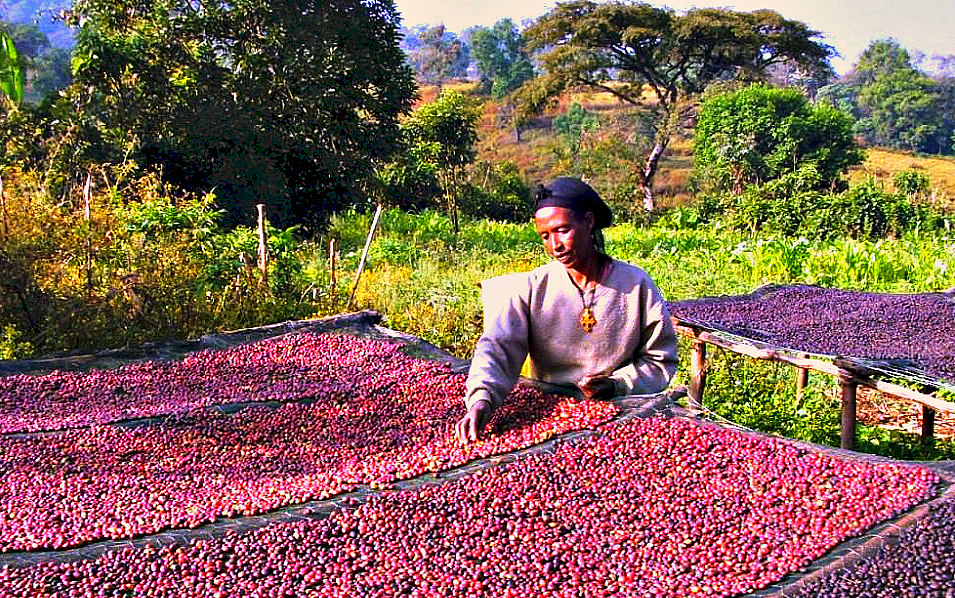
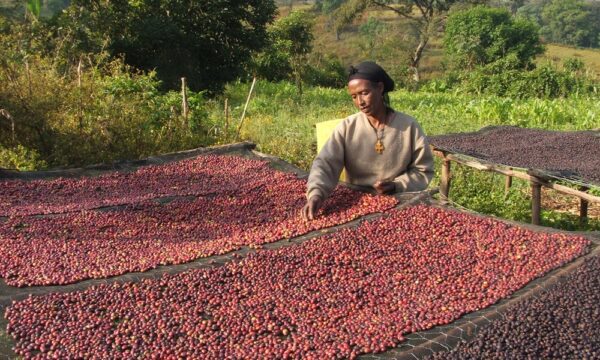
Female coffee farmer in Ethiopia. Credit: CABI
Progress in action: What works when expanding finance for women and young people
Despite these systemic hurdles, evidence shows that changed financial models deliver concrete results.
Gender-inclusive credit guarantees for coffee farmers in Ethiopia
Combining partial credit for coffee farmers with practical support for women and young farmers helps more of them qualify for formal loans. Data proves this approach works. By covering part of the risk if borrowers cannot repay, these guarantees give banks the confidence to lend rather than turn farmers away.
Alternative agreements for women and youth in Rwanda, Tanzania, and Uganda
Organizations like Root Capital have revolutionized lending through three-way lending agreements. This approach uses a buyer’s future purchase agreement as security instead of land titles. As a result, young people and women who do not own land can still qualify for loans based on prospective future sales.
Movable asset registries unlock finance for women and youth in Ghana, Liberia, and Malawi
Legal reforms that recognize “movable” assets as collateral for loans have unlocked substantial finance for women and youth. These are assets such as livestock, machinery, and stored crop inventory. Using this model, organizations that register assets have already helped to unlock more than $3 billion in loans in Ghana and $230 million in Liberia. Women entrepreneurs have received around 30% of this financing.
A smart business mandate
We are calling for action to close the gap when it comes to credit for coffee farmers. Our message is this: by using alternative approaches, financial institutions can unlock their potential. It is smart business, and everyone stands to gain.
Commercial banks are missing an opportunity. Smallholder coffee farmers, especially women and young people, are not too risky to finance; they simply lack access to suitable financial services. Banks must leverage age- and gender-disaggregated data to design flexible collateral options and financial products tailored to women and youth. African governments must strengthen online registries for movable collateral. Successes in Ghana and Liberia are valuable blueprints. Moreover, governments must introduce legislation to reform customary land ownership laws that bar women from owning land.
Inclusive lending is not a win-lose game; it is a collaboration and a path to a larger and more resilient coffee sector. It is time to stop viewing smallholders as the problem and treat Africa’s coffee producers for what they truly are: viable business partners in a multi-billion-dollar global industry.
Author biography
Dr Morris Akiri is an executive leader with over 25 years of experience driving scalable ecosystems innovations, shaping agricultural policy, and overseeing transcontinental development research. He currently serves as the Executive Director, Africa, at CABI. A champion of financial inclusion and agribusiness development, Dr Akiri is the principal contributor to CABI Working Paper 38, “Enhancing credit access for ‘missing middle’ and last-mile borrowers in African coffee value chains”, which addresses critical financing gaps and business opportunities across the continent.
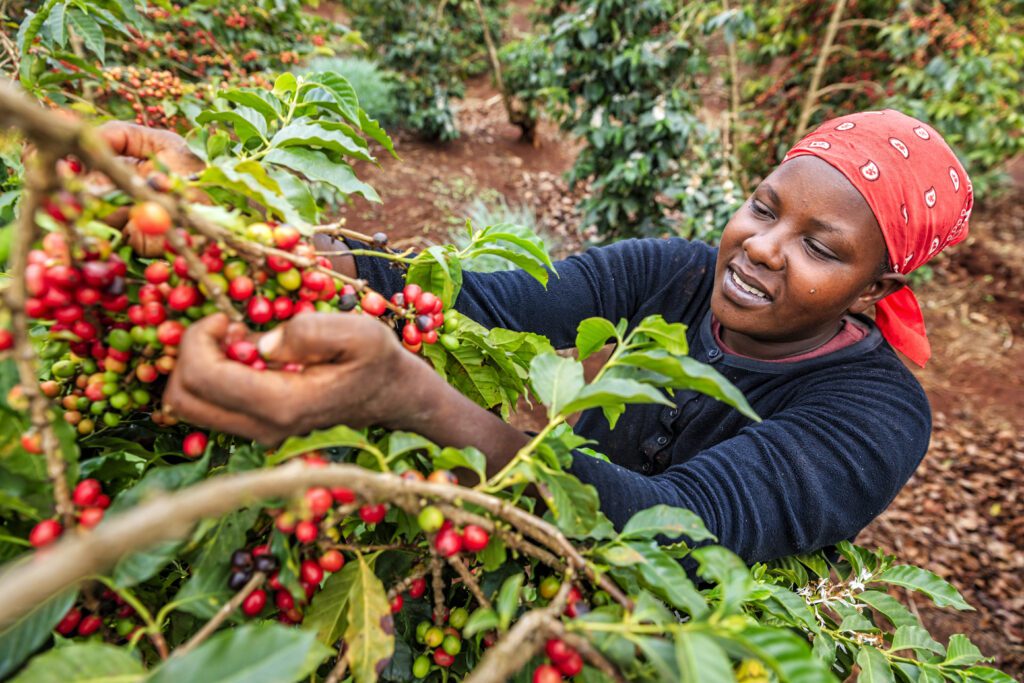
Main image: A young female farmer collecting coffee berries from a coffee plant, Kenya, Africa. Credit: iStock
Related News & Blogs