
CABI has strengthened its presence in Uganda following the signing of a Host Country Agreement (HCA) with the Government of Uganda. The milestone marks a significant step forward in a long-standing partnership that has been steadily shaping how agricultural challenges are understood and addressed across the country. It is expected to further deepen partnerships and support the scaling of science-based agricultural solutions across the country.
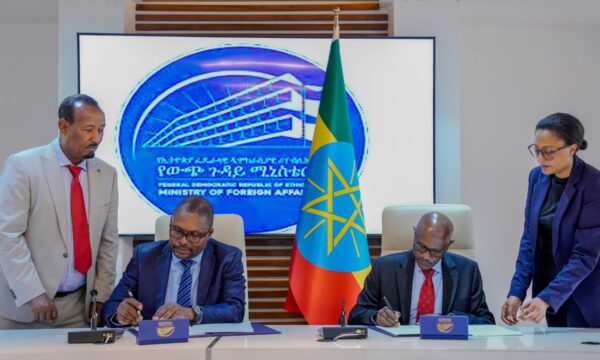
The agreement was signed by the Minister for Foreign Affairs, Gen. Odongo Jeje Abubakhar on behalf of the Government of Uganda and CABI’s Executive Director for Africa, Dr Morris Akiri representing CABI. Also present were CABI’s Regional Director, Dr Monica Kansiime; Scientist, Development Communication and Extension, Ms Christine Alokit; and Dr Nassib Mugwanya, representing the Director General of the National Agricultural Research Organisation (NARO), CABI’s Membership Liaison Officer.
Hon. Gen. Odongo Jeje Abubakhar, remarked that, “This Host Country Agreement is a testament to the strong and enduring partnership between Uganda and CABI. We welcome CABI’s formal presence in Uganda and greatly value the organization’s long-term commitment to addressing agricultural challenges particularly sanitary and phytosanitary issues that affect Uganda’s agricultural global trade.”
In response, Dr Morris Akiri, thanked the Minister for the warm welcome and reiterated CABI’s commitment to deepening its long-standing partnership with the Government of Uganda.
“This agreement marks not just a milestone, but a renewed promise to work hand-in-hand with Uganda to address emerging agricultural threats, protect safe trade, and improve the livelihoods of Ugandan farmers,” Dr Akiri said.
“CABI has a rich history with Uganda dating back to 1962, when the organization established an East African station at Kawanda research station. These early efforts focused on biological control of invasive species across African countries, as well as identifying natural pest enemies for use in other regions.”
He also acknowledged the continued technical collaboration with Ministry of Agriculture Animal Industry and Fisheries (MAAIF), and NARO, and other partners who have supported CABI’s efforts in the country.
Speaking at the signing, Dr Nassib Mugwanya, underscored the value of NARO’s long-standing partnership with CABI in advancing Uganda’s agricultural transformation.
“NARO values its long-standing partnership with CABI, which has contributed significantly to strengthening science-based responses to some of the most pressing challenges facing Uganda’s farmers. Through this collaboration, we have worked together to address invasive species, crop pests and diseases, improve plant health systems, and support practical solutions that enhance productivity, food safety, and livelihoods. We look forward to deepening this partnership in ways that continue to deliver tangible benefits to farmers and the wider agricultural sector,” he said.
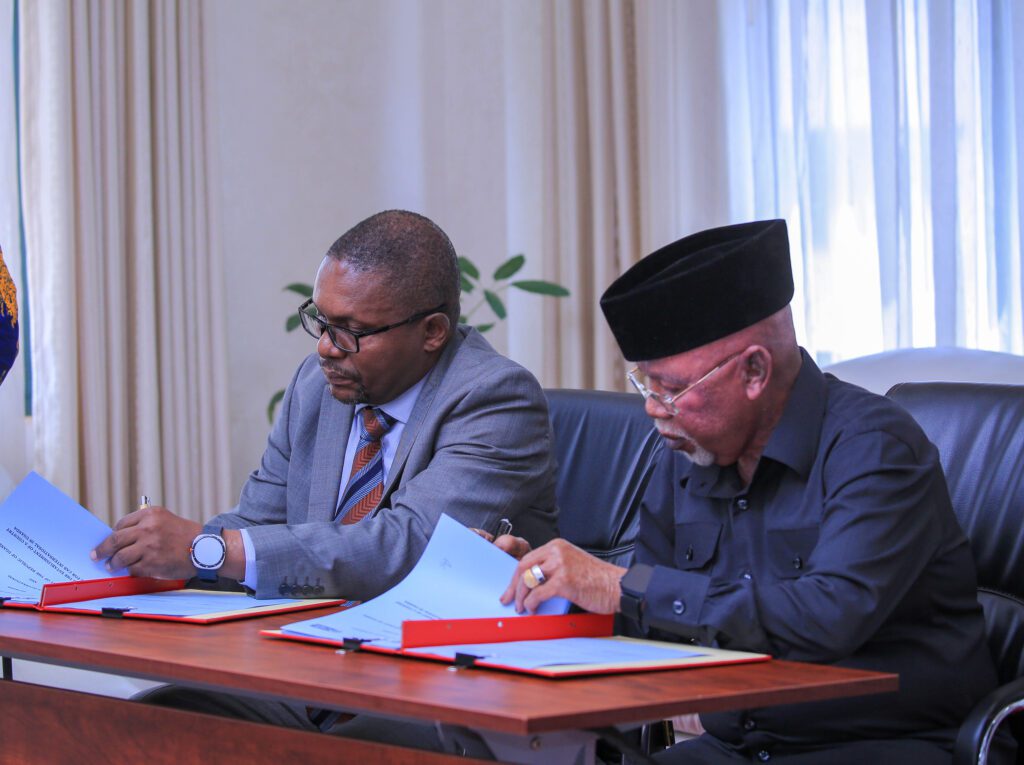
Uganda Minister for Foreign Affairs, Gen. Odongo Jeje Abubakhar and CABI’s Executive Director for Africa, Dr Morris Akiri during the HCA signing ceremony.
CABI’s work in Uganda at a glance
CABI’s programming has continually evolved to meet emerging needs, ranging from plant health and the One Health approach to trade facilitation, digital advisory services, pesticide risk reduction, and youth engagement as Agri service providers.
CABI, working alongside the MAAIF, HortiFresh, and COLEAD, is leading a European Union–funded initiative to strengthen Uganda’s Sanitary and Phytosanitary (SPS) systems. By reducing export rejections and improving compliance with international standards, the project is expected to unlock as much as $150 million in additional revenue for the country’s horticultural sector.
Uganda is also a focus country for the global PlantwisePlus Programme, which helps farmers anticipate and respond to agricultural threats through timely, science-based advice. In partnership with MAAIF, the programme has strengthened the training and certification of agro-input dealers, addressing a critical gap where nearly half of dealers previously operated without the required legal credentials.
PlantwisePlus also creates new opportunities for young people, equipping them to serve as agriservice providers who deliver plant health advice in their communities. By promoting safer pesticide use and encouraging Integrated Pest Management (IPM) and nature-based solutions, the programme reduces risks from improper pesticide handling and contributes to safer food production.
CABI’s collaboration with MAAIF, NARO, CropLife, and Kampala City Council Authority has extended to public campaigns on food safety, particularly around pesticide misuse on shelf products such as tomatoes. These efforts enhance farmers’ skills in pesticide handling while raising awareness among traders and consumers about the importance of food safety.
With support from Biovision and WTS, Uganda’s pioneering joint crop-livestock clinics embody a One Health approach. Plant doctors and veterinary officers work together to address interconnected threats such as pesticide poisoning and zoonotic diseases. This integrated model reduces risks to people, animals, and the environment, while strengthening food safety for both local and export markets.
CABI has also partnered with NARO to tackle invasive species such as the papaya mealybug, mango mealybug, and parthenium weed.
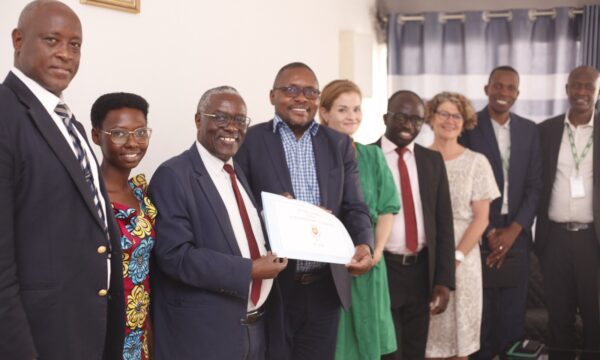
Main image: Officials from the Government of Uganda and CABI pose for a group photo following the signing of the Host Country Agreement in Kampala, marking a new chapter in strengthening agricultural collaboration.
Useful links
- More partnerships in Uganda
- CABI works in partnership to step up fight against pests and diseases of papaya in Uganda
- Joint crop and livestock services for smallholder farmers
- Strengthening Uganda’s Agro-Input Dealer Knowledge through enhanced professional training
- Project to improve Uganda’s Sanitary and Phytosanitary measures aims to unlock up to $150 million in revenue
- PlantwisePlus Uganda
Related News & Blogs