About
CABI’s centre at Silwood Park, Imperial’s ecology campus in Berkshire near Ascot, was established in 2025 following a move from CABI’s previous centre in Egham. However, CABI has had a scientific base in the UK since its very beginning. Over the years, its work has supported hundreds of CABI projects and reached hundreds of thousands of farmers in countries across the world. Much of the team’s work is for national government departments, in particular Defra and the Foreign, Commonwealth & Development Office.
The centre, managed by Dr Julien Godwin, CABI’s Regional Director for the UK, operates across the globe providing support on a range of topics, including invasive species, pests and diseases, knowledge management and commodities. Its scope is extensive – it carries out around 100 projects each year, which range from working to identify nematodes that are new to science in Chile, to seeking natural enemies for Europe and North America’s most invasive weeds.
With over 50 staff, a growing team of scientists carries out applied scientific research to find safe and sustainable solutions to problems in agriculture and the environment. An array of labs, glasshouses, polytunnels and two level 2 quarantine suites with ten climate-controlled chambers, means the centre is perfectly equipped to work with almost any organism in the world, in ideal conditions.
The centre is also home to CABI’s Microbial services team. The team’s specialist staff provide microbial expertise, with particular emphasis on agricultural and biotechnological applications. Services provided include microbial identification, culture supply and deposit, diagnostic and advisory service, contract research and provision of publications and training. The team’s work is supported by the Genetic Resource collection on site, which holds cultures of over 30,000 living micro-organisms.
The centre collaborates extensively with both public and private sector organizations, NGOs, universities, governments and many more.
Corporate office
CABI’s corporate office is home to over 100 staff working in Publishing, Sales and Customer Service, IT, Marketing, Finance, Project Development and Digital Development.
Contact us
Executive Director
Silwood Park, Buckhurst Road, Ascot, Berkshire, SL5 7PY, UK
T: +44 (0)1491 829025
Centre staff









Centre News & Blogs
Over 250 researchers benefit from Script webinar aimed at writing effective policy briefs
28th November 2025


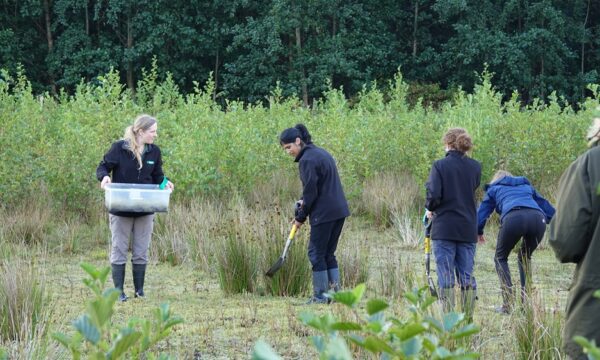
CABI supports release of biological control agents to fight invasive weeds in the Netherlands

CABI announces plan to strengthen impact and ensure long-term sustainability
Documents
Proceedings of a joint CABI-EWRS workshop - October 2024
In October 2024, CABI and two working groups (invasive plants and biological control) of the European Weed Research Society (EWRS) held a joint workshop on 'Managing the plant invasions by biological control.' These are the proceedings from the workshop.
Progress report: UK weed biocontrol projects - December 2024
This is the 18th in a series of annual summary notes on progress made on UK weed biocontrol projects and covers the time frame from April to the end of November 2024.
Progress report: UK weed biocontrol projects - March 2024
This is the 18th in a series of annual summary notes on progress made on UK weed biocontrol projects and covers the time frame from December 2023 to the end of March 2024.
Progress report: UK weed biocontrol projects - November 2023
This is the 17th in a series of annual summary notes on progress made on UK weed biocontrol projects and covers the time frame from April to the end of November 2023.
Progress report: UK weed biocontrol projects - March 2023
This is the 16th in a series of annual summary notes on progress made on UK weed biocontrol projects and covers the time frame from December 2022 to the end of March 2023.
Progress report: UK weed biocontrol projects - November 2022
This is the 15th in a series of annual summary notes on progress made on UK weed biocontrol projects and covers the time frame from May to the end of November 2022.
Progress report: UK weed biocontrol projects - May 2022
This is the 14th in a series of annual summary notes on progress made on UK weed biocontrol projects and covers the time frame from December 2021 to the end of April 2022.
Related projects
Evaluating the mycoherbicide potential of a leaf-spot pathogen against Japanese knotweed
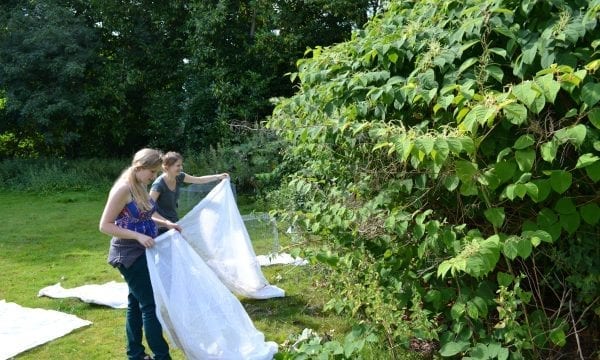
Japanese knotweed is a highly invasive weed that impacts severely on native biodiversity and local infrastructure in its introduced range. Whilst chemicals are currently used to control the weed, this approach is costly and unsustainable. Biological control is an alternative method. The damaging leaf-spot fungus, Mycosphaerella polygoni-cuspidati, which attacks the plant in its native range was found not to be suitable as a classical biocontrol agent. However, the pathogen is considered to hold potential as a mycoherbicide. The aim of this project is to undertake proof-of-concept research into a potential mycoherbicide, in collaboration with the private industry.
Start:31/01/16 -End:31/12/21