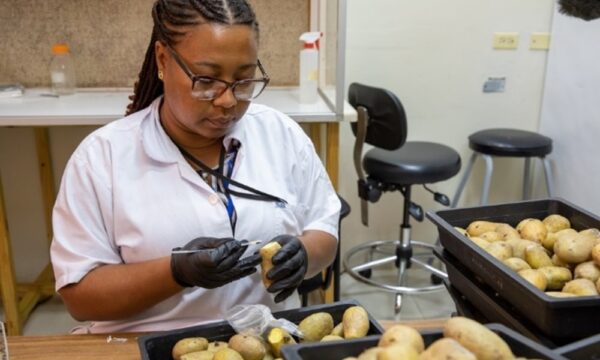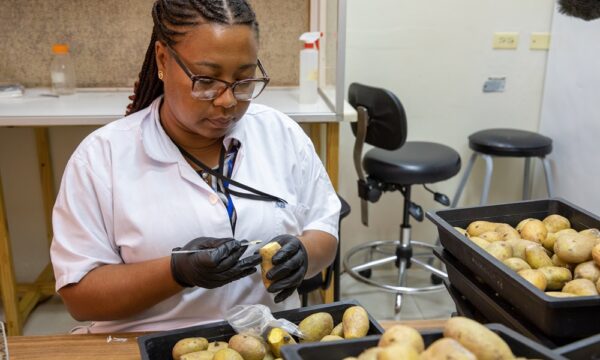
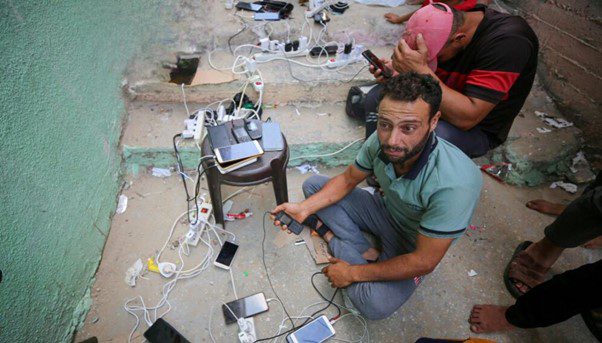
In Gaza, a man has stitched together fragments of shattered solar panels to keep the lights alive. Others coax power from spent batteries, charging phones and running appliances. From the ruins of his home, an engineer salvages seeds and rain-fed plants. With local farmers, he transforms tree waste into artificial soil, building a nursery inside containers. Elsewhere, small-scale desalination systems drip hope into families’ hands, providing clean water.
These voices are what you hear when you press play on Sharara, a podcast born from rubble to carry stories of science and innovation from conflict-affected regions in the Middle East and North Africa (MENA).
Sharara, Arabic for “spark”, was launched to counter misinformation and highlight how science and innovation shape lives even in the most fragile contexts. Its slogan, “Hope from the Heart of Crisis,” reflects its mission to amplify voices of scientists, innovators, and journalists working under extreme conditions.
And now, that mission has new strength. SciDev.Net, part of CABI, has secured fresh funding from The Swedish International Development Cooperation Agency (Sida) to produce the next three seasons of the Sharara Podcast.
With the support, Sharara will deliver three new seasons through 2027, totalling 45 episodes.
“Sharara is more than just a podcast,” says Bothina Osama, MENA Regional Coordinator for SciDev.Net. “In times of conflict, research and scientific capacity often collapse, with devastating consequences for health, the environment, and economic stability. This podcast helps us amplify voices and solutions that matter.”
Building on the success of its first season, Sharara Season 2 features powerful narratives from fragile states such as Yemen, Libya, northern Syria, Sudan, and the Palestinian territories.
Through credible, life-saving science journalism, SciDev.Net’s MENA edition works with local reporters to ensure these stories reach global audiences.
Paul Dawson, SciDev.Net’s Operations Director, highlights the importance of partnerships: “Sida’s commitment to poverty reduction and sustainable development aligns closely with SciDev.Net’s mission. Their support enables us to continue Sharara and amplify science and innovation stories from conflict-affected communities — where reliable information and local solutions matter most.”
Keeping knowledge alive
In fragile states like Yemen, Libya, Northern Syria, Sudan, and the Palestinian territories, science often disappears just when it’s needed most. Through personal stories and on-the-ground reporting, the podcast shows how scientific research, local innovation and everyday problem- solving persists even in the hardest circumstances.
“Sharara matters,” Bothina says simply. “Because it reminds us that even in crisis, knowledge doesn’t die. It adapts. It survives. And sometimes, it sparks hope.”
“We also challenge the idea that science is distant, neutral or disconnected from people’s lives.”
For policymakers and humanitarian actors, the podcast provides reliable, evidence-based insights, ensuring decisions affecting vulnerable communities are grounded in facts, not speculation. For listeners everywhere, it is a reminder that even amid crisis, knowledge can save lives.
And they chose audio for a reason.
“Using audio makes these stories more immediate and powerful, letting listeners truly understand the challenges and resilience of those doing science in conflict zones,” Bothina says.
Building on success
Sharara covers urgent topics: food security, water scarcity, and innovative solutions for daily survival in conflict zones. Popular episodes include Gazans’ Tricks to Light Their Lives Under Bombardment and Health Innovations in the Shadow of War.
Sharara’s first season delivered 20 episodes and drew over one million listeners across Spotify, YouTube Music, and SoundCloud. The second season launched on November 30th, opening with an episode that honors the voices behind the mic including those who gathered stories in chaos, without studios or soundproof rooms.
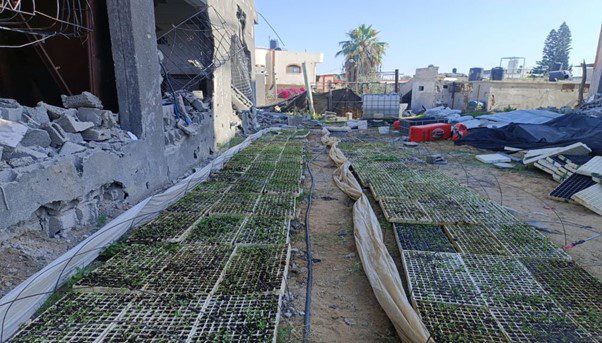
Attempts to cultivate some plants from gathered seeds in northern Gaza after the first ceasefire. Credit: Youssef Abu Rabee, SciDev.Net
Impact beyond the airwaves
After an episode on solar irrigation pumps, Syrian farmers began talks with FAO to adopt Yemeni techniques for storing solar power using lithium batteries, an idea that enables irrigation even on cloudy days with only a 20% cost increase.
“That is cross-border knowledge transfer. All of it was born from a podcast,” says Bothina.
International organizations including FAO, MSF, and UNHCR have praised Sharara for fostering knowledge exchange and bridging humanitarian and development actors.
Sharara is now in talks with major broadcasters like Sout Al Arab, The Nile, and Palestine Voice, after airing on Sanaa Radio in Yemen. Algeria, Egypt, Tunisia, and Morocco lead in listener numbers, proving that even outside conflict zones, people are eager to know more about how life finds its way in conflict affected countries.
Bold goals for the future
Sharara’s ambitions are clear:
● Increase listenership by 20% annually through compelling content and wider distribution.
● Act as a bridge between stakeholders by providing reliable, accessible insights into science-driven solutions for communities in crisis.
● Train and mentor journalists in conflict-affected areas of MENA in podcast production and storytelling.
● Engage audiences aged 18–60 to foster trust in science and innovation.
● Partner with major broadcasters like Arab Voices to reach millions and amplify impact.
Additional information
Main image: Gazans use solar-powered charging points to recharge their mobile phones. Credit: Basel AlAttar, SciDev.Net
Listen to Sharara on: Spotify, YouTube Music, SoundCloud, and othe major platforms
Further reading and viewing
Seeds sown among Gaza rubble offer hope of food
Gaza war documented in stories of resilience
Between the conflict and thirst: water solutions born from crises
Related News & Blogs