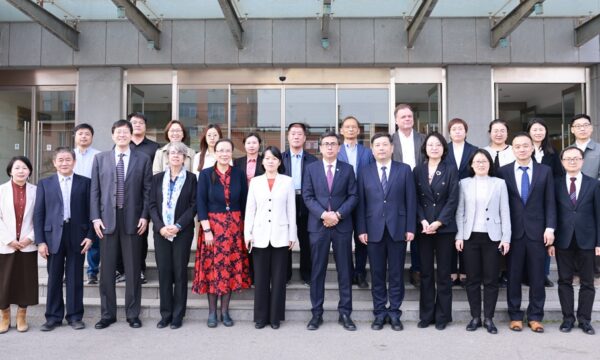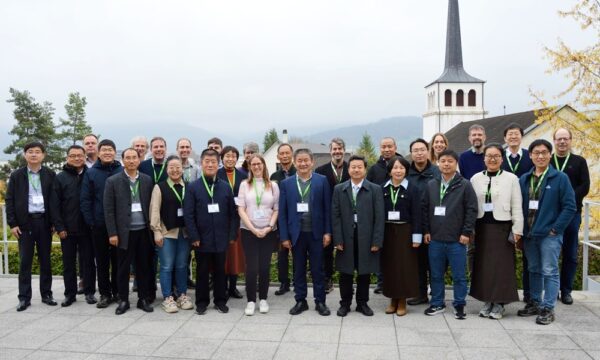
China and CABI have been successfully collaborating for decades, with China being an important Member Country of CABI since 1995. In 2019, the Ministry of Agriculture and Rural Affairs (MARA) of China and CABI jointly started operating the European Laboratory at CABI’s centre in Switzerland.
The MARA China-CABI European Laboratory is affiliated with the MARA China-CABI Joint Laboratory for Biosafety, established in 2008, in Beijing at the Institute of Plant Protection (IPP) of the Chinese Academy of Agricultural Sciences (CAAS).
It aims to support collaboration by facilitating capacity building and exchanges of experts, providing a link between East Asia, Switzerland and other European countries. CABI and MARA scientists engage in research and development in agricultural science that sustains local and global influence, while helping to address critical challenges and achieve a greater reach of science-based solutions.
What does the MARA China-CABI European Laboratory offer?
- Effective collaboration on the prevention, containment, as well as biological and integrated management of invasive pest species
- Scientific and technological exchange and capacity building, including exchanges of experts, particularly young scientists
- Joint organization of symposia and conferences
- Cooperation with national or international agricultural bodies
Highlights and successes
- Secondments each year of one or more young scientists from China to the European Laboratory for a period of 3-4 months
- Advances in biosafety assessments on the biological control of invasive species, for example:
- the South American-origin invasive aquatic weed, parott's feather, in Europe and China using Lysathia cilliersae and Phytobius vestitus herbivores
- the Asian-origin box tree moth in Europe
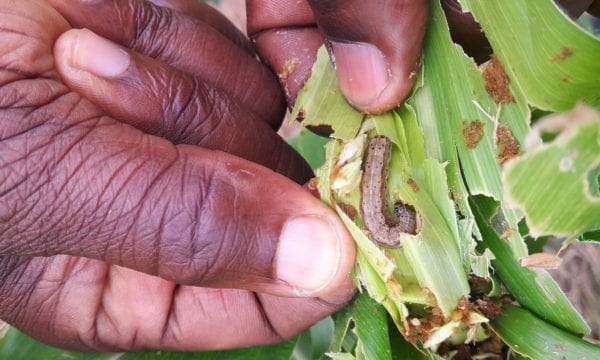
- the American-origin fall armyworm with Trichogramma and other parasitoids
- A better understanding of the potential spread of invasive species caused by climate change
- Joint publications, for example:
The team and key contacts
The team consists of highly-skilled technical and international collaboration experts, including two Co-directors and two Secretaries.

Co-director of MARA CABI European Laboratory
CABI in Switzerland
Hariet Hinz, Global Director, Invasive Species


Co-director of MARA CABI European Laboratory
IPPCAAS in China
Jie Zhang, Professor/Deputy Director General

Co-secretary of MARA CABI European Laboratory
IPPCAAS in China
Fang Tian, Associate Professor/ Deputy Director, Division of Domestic and International Cooperation

Co-secretary of MARA CABI European Laboratory
CABI in Switzerland
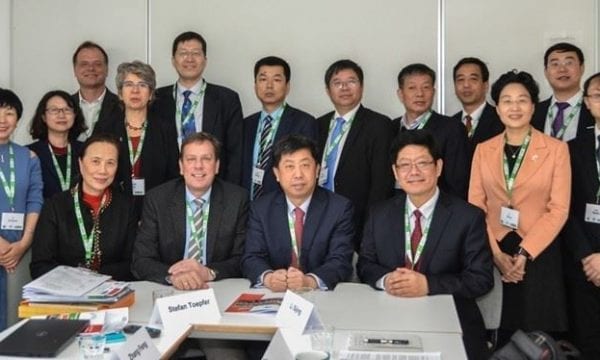
Stefan Toepfer, Crop Health Advisor
Partners
The MARA China-CABI European Laboratory is linked to:
Teams at CABI
Chinese partners
- MARA China-CABI Joint Laboratory for Biosafety at IPPCAAS in Beijing
- Institute of Plant Protection, Chinese Academy of Agricultural Sciences (IPPCAAS)
- Shandong Academy of Sciences, and MARA-CABI subcenter
- Anhui Academy of Sciences, and MARA-CABI subcenter
- Grassland Research Institute, and MARA-CABI subcenter
- Yunan Agricultural University, and MARA-CABI subcenter
- and many others
Related Projects
Increasing rice production around the Mekong
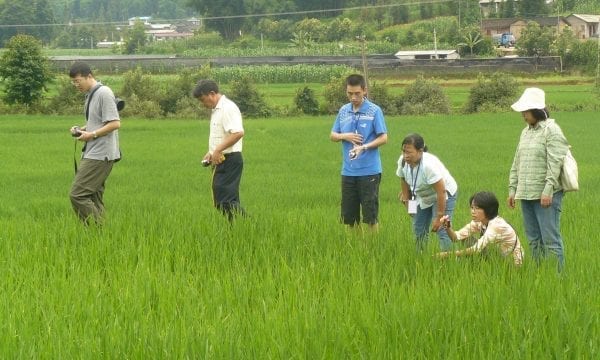
Rice is the most important crop in southwestern China, Laos and Myanmar. Despite recent improvements, productivity is still low with millions of tons lost to pests, diseases and weeds. Intensive pesticide use has led to insecticide resistance, outbreaks of secondary pests and damage to farmers’ health. This project is introducing a biologically based pest management approach to safely and sustainably increase rice production, improving the livelihoods of smallholder farmers in the region.
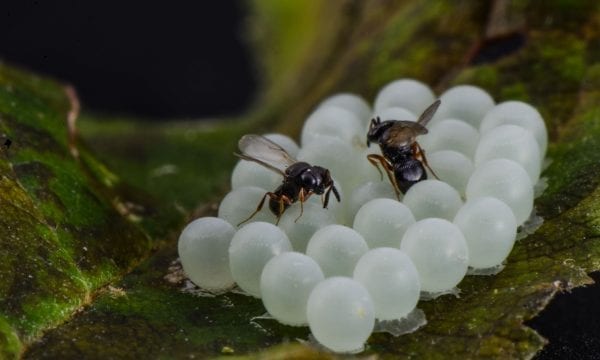
Biological control of brown marmorated stink bug
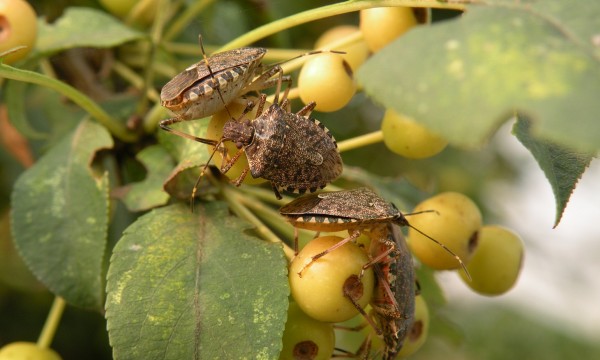
International trade is a common way for insects to ‘hitch-hike’ their way to new countries. The brown marmorated stink bug, originally from East Asia, has become a harmful invasive pest of many fruit and vegetable crops in North America and Europe. Biological control using Asian or European natural enemies may be an environmentally friendly, cost-effective and sustainable way of managing the pest. CABI is drawing on its network of expertise in Europe and China to explore best options.