
Strengthening taxonomy and plant health diagnostics across ASEAN
Southeast Asia is one of the world’s most biodiverse regions, but invasive pests, diseases and environmental pressures increasingly threaten this biodiversity. Limited capacity in classification (taxonomy) and diagnostics of pests and diseases has further consequences on biodiversity conservation, compliance with international agreements and access to regional and global trade. For member states of the Association of Southeast Asian Nations (ASEAN), the ASEAN Network on Taxonomy (ASEANET) has been created to support ASEAN countries. The network aims to close gaps in taxonomy, diagnostics and phytosanitary systems. These efforts will help to strengthen plant health systems, improve pest identification and support safe agricultural trade across ASEAN. Through ASEANET, CABI’s role as Technical Secretariat will support ASEAN member states by coordinating the network, facilitating collaboration and supporting training and knowledge sharing.
Project Overview
So, what’s the problem
Southeast Asia’s rich biodiversity underpins food security, livelihoods, and economic growth. But it is increasingly threatened by invasive pests, plant diseases, and environmental degradation. Effective management of these threats depends on timely and accurate identification of pests, diseases and weeds. However, many ASEAN member states have limited taxonomic expertise, diagnostic capacity and access to harmonized protocols.
These gaps affect the countries’ ability to meet international obligations under agreements such as the Convention on Biological Diversity (CBD) and the World Trade Organization Sanitary and Phytosanitary (WTO SPS) Agreement. Weak diagnostic capacity also constrains quarantine operations, delays responses to emerging threats and creates barriers to agricultural trade.
A lack of structured expert networking and standardized procedures further limits regional cooperation. Without access to trusted specialists and shared diagnostic systems, countries struggle to respond quickly to invasive or quarantine pests, increasing risks to biodiversity and trade.
ASEANET helps to address these challenges by strengthening regional taxonomic and diagnostic capacity and promoting harmonized phytosanitary measures. It also facilitates collaboration among ASEAN member states and international experts. This coordinated approach supports biodiversity conservation, plant health protection, and improved trade outcomes across the region.
What is this project doing?
Established in 2003, ASEANET facilitates expert networking, harmonized diagnostic protocols and knowledge sharing across the region.
It operates a confidential Clearing House for pest identification and maintains an Expertise Register linking ASEAN countries to regional and international specialists.
Through its role as Technical Secretariat, CABI coordinates the network and provides technical leadership to support regional collaboration and capacity development in taxonomy and plant health diagnostics.
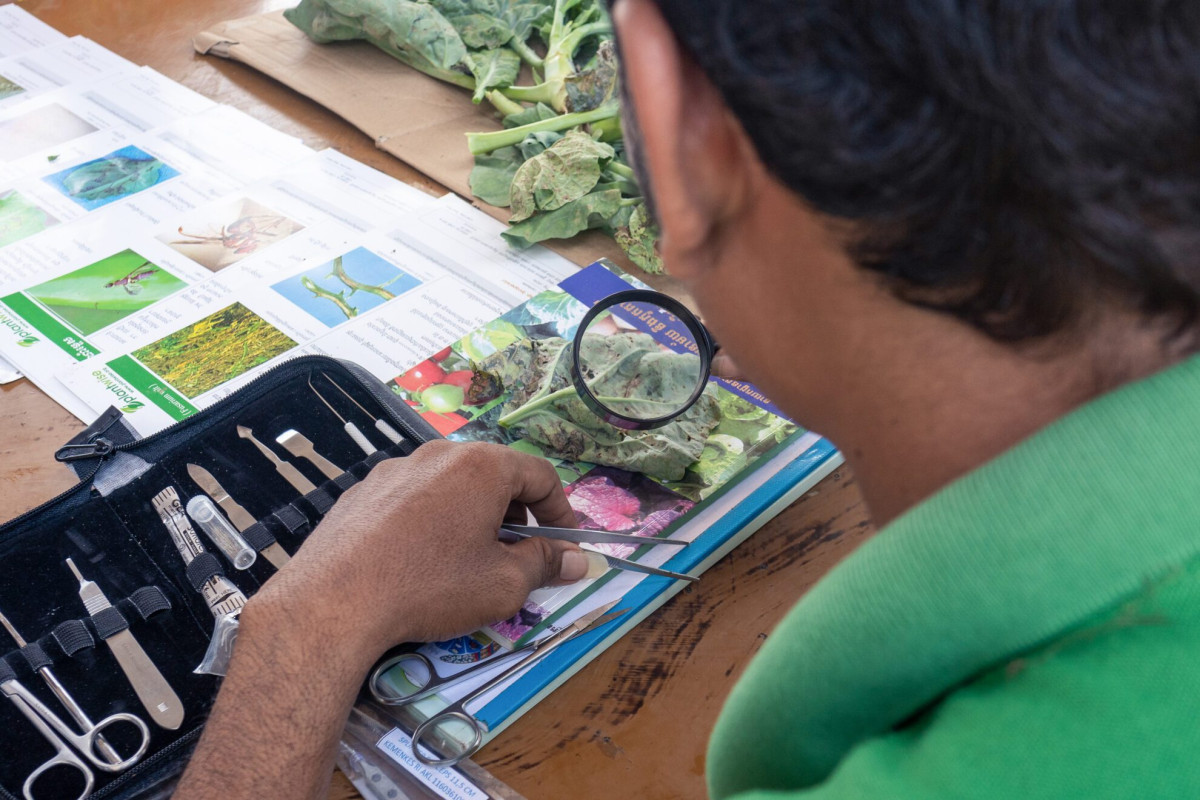
CABI supports ASEANET activities by organizing regional training workshops, facilitating expert engagement, maintaining diagnostic support systems and coordinating technical initiatives under the ASEAN Regional Diagnostic Network (ARDN).
These activities help ASEAN member states strengthen plant health systems, improve pest and disease identification, and meet obligations under the CBD and the WTO SPS Agreement, while supporting agricultural trade and biodiversity protection.
Key activities include:
- Hosting the ASEANET Secretariat and acting as Technical Secretariat for the ASEAN Plant Health Network
- Operating a confidential Clearing House for standardized identification of plant pests, diseases, and weeds
- Maintaining an Expertise Register detailing specialist skills, experience, and availability
- Organizing regional training workshops on taxonomy, SPS and plant health, invasive species, and database development
- Developing diagnostic protocols for specimen submission, handling, and reporting
- Implementing ASEAN ARDN projects funded by development partners
Results
Since its establishment, ASEANET has delivered significant and sustained impact across ASEAN member states.
Through the network, more than 25 regional workshops and training events related to SPS standards and plant health have been organized, helping to strengthen national capacity in pest identification, surveillance and plant health management.
The network has also established a confidential Clearing House that provides standardized pest identification services to support quarantine and emergency response activities. An Expertise Register has been developed to connect ASEAN countries with trusted regional and international taxonomic specialists.
As Technical Secretariat, CABI has contributed to these outcomes by coordinating regional collaboration, providing technical expertise and facilitating training and knowledge sharing across the network. These efforts have strengthened diagnostic capacity, improved pest surveillance and quarantine operations and supported compliance with international standards.
CABI looks forward to continuing to support ASEANET by strengthening regional diagnostic capacity, expanding expert collaboration and enhancing knowledge exchange to help ASEAN member states respond more effectively to emerging pest threats while supporting biodiversity conservation and sustainable agricultural trade.
Project Manager

Donors
Biodiversity Network International (BioNET Technical Secretariat)
International Centre for Management of Pest Fruit Flies (ICMPFF)
United States Department of State (DOS)
ASEAN-Australia Development Cooperation Program (AADCP)
ASEAN-Australia-New Zealand Free Trade Agreement Program (AANZFTA)
New Zealand Aid Programme (NZ-Aid)
Partners
ASEAN Regional Diagnostic Network
Global Invasive Species Information Network
Regional and international taxonomic experts