
Sustainably integrating plant clinics into extension systems
Summary
In many countries, overstretched extension services mean smallholder farmers miss out on timely plant health advice. The CABI-led PlantwisePlus programme has been helping to close the gap through plant clinics – places where farmers can receive free diagnosis and remedial support. First established in 2011, the clinics now operate in over 30 countries. In 2025, Malawi achieved a milestone, running clinics in every district nationwide. The approach is improving pest management, encouraging the uptake of integrated pest management (IPM), and strengthening plant health systems.
The story
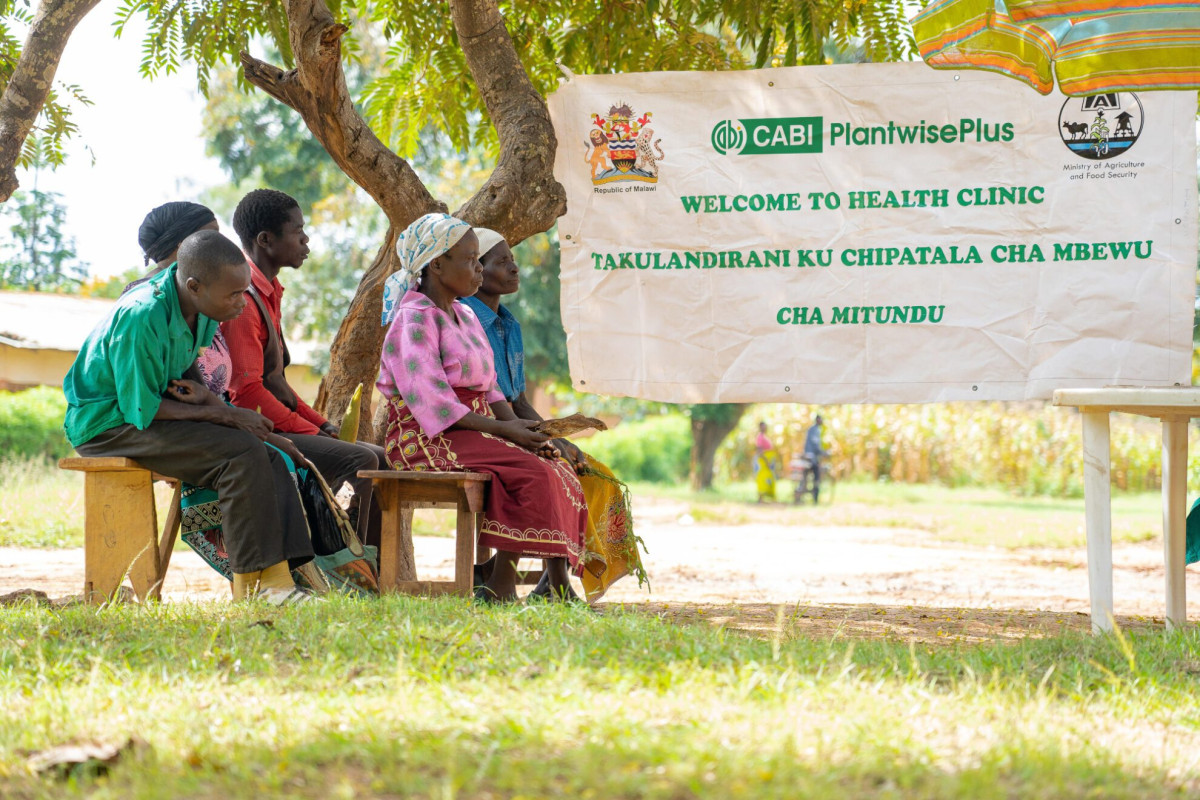
Agricultural extension services struggle to reach smallholder farmers in remote, rural locations in many countries. Limited resources stretched across large regions make it challenging to reach people effectively. This gap means many farmers cannot access practical, expert plant health advice. Women farmers, in particular, struggle to access support due to advisory systems and social norms that primarily target male farmers. As climate change exacerbates the impact of crop pests on agricultural productivity, improving access to science-based knowledge has never been more important.
The PlantwisePlus programme addresses this challenge through its farmer advisory pathway and by supporting countries to run plant clinics. Trained plant doctors provide farmers with tailored advice for their plant health problems and ongoing integrated pest management (IPM) support, which continues after the initial diagnosis. Plant doctors assist the farmers through plant clinics and in many other fora where the farmers and plant doctors interact.
In 2025, Malawi achieved a remarkable milestone: it now operates a network of trained plant doctors in every district across the country. Today, Malawi runs over one hundred plant clinics staffed by hundreds of plant doctors. Almost all trained plant doctors in the country are government extension officers.
In a recent study, plant doctors explained how the establishment of plant clinics has increased farmers’ ability to identify and manage plant pests and diseases, with clients of plant clinics more likely to adopt IPM techniques. These plant health professionals consistently viewed the clinics as an improvement to local agricultural services. Embedding clinics within the national extension system is helping to build a more sustainable plant health service for farmers nationwide.
“This is a success story … about building a resilient, national plant health system from the ground up.” – Dr Natasha Mwila, Regional Director for Southern Africa, CABI
Expertise
CABI has developed a number of core skills which will ensure it achieves its strategic goals.
Crop health
Development communication and extension
Digital development
Value chains and trade
Focus
CABI's strategic goals.
Climate change and biodiversity
Food and nutrition security
Gender and youth
Countries
Our work is delivered through dedicated teams and key partners in over 40 countries across the world.
Sustainable Development Goals
Helping small-scale farmers improve their livelihoods by providing knowledge about plant health and access to markets.
Developing a sustainable food system that helps smallholders meet the world's growing need for food.
Empowering women and young people to play a more powerful role in the future of agriculture.
Helping grow more from less land by introducing higher-yielding and environmentally responsible food production techniques.
Helping agricultural sector to supply sufficient, safe and nutritious food, embedded in a healthy and climate resilient landscape
Protect, restore and promote sustainable use of terrestrial ecosystems, combat land degradation and halt biodiversity loss.
Organizations must develop and enhance partnerships to find the best and most sustainable solutions to the world's challenges.
Related projects
PlantwisePlus
Farmers’ crops are increasingly at the mercy of climate change, pests and diseases. PlantwisePlus will work to help countries predict, prepare for and prevent potential threats and reduce crop losses. We will provide comprehensive support to countries and farmers so they meet the increasing global demand for quality food in a changing climate.
Start: 01/07/2021