
Evaluation of fungal pathogens for biological control of Navua sedge
Navua sedge is an aggressive invasive perennial sedge native to tropical Africa. Since its introduction to northern Queensland, Australia, in the 1970s, it has negatively affected the beef, dairy, and cropping industries. In 2017, the Department of Agriculture and Fisheries (DAF) in Australia launched a biological control programme against this weed. Surveys conducted by DAF scientists in equatorial Africa have identified two fungi as potential biological control agents: a smut fungus that targets flower heads and seeds, and a rust fungus that infects leaves and stems. CABI scientists are currently investigating the biology and host specificity of these two fungal pathogens to evaluate their suitability as biological control agents for Navua sedge.
Madagascar
Nigeria
Tanzania
United Kingdom
Project Overview
So, what’s the problem
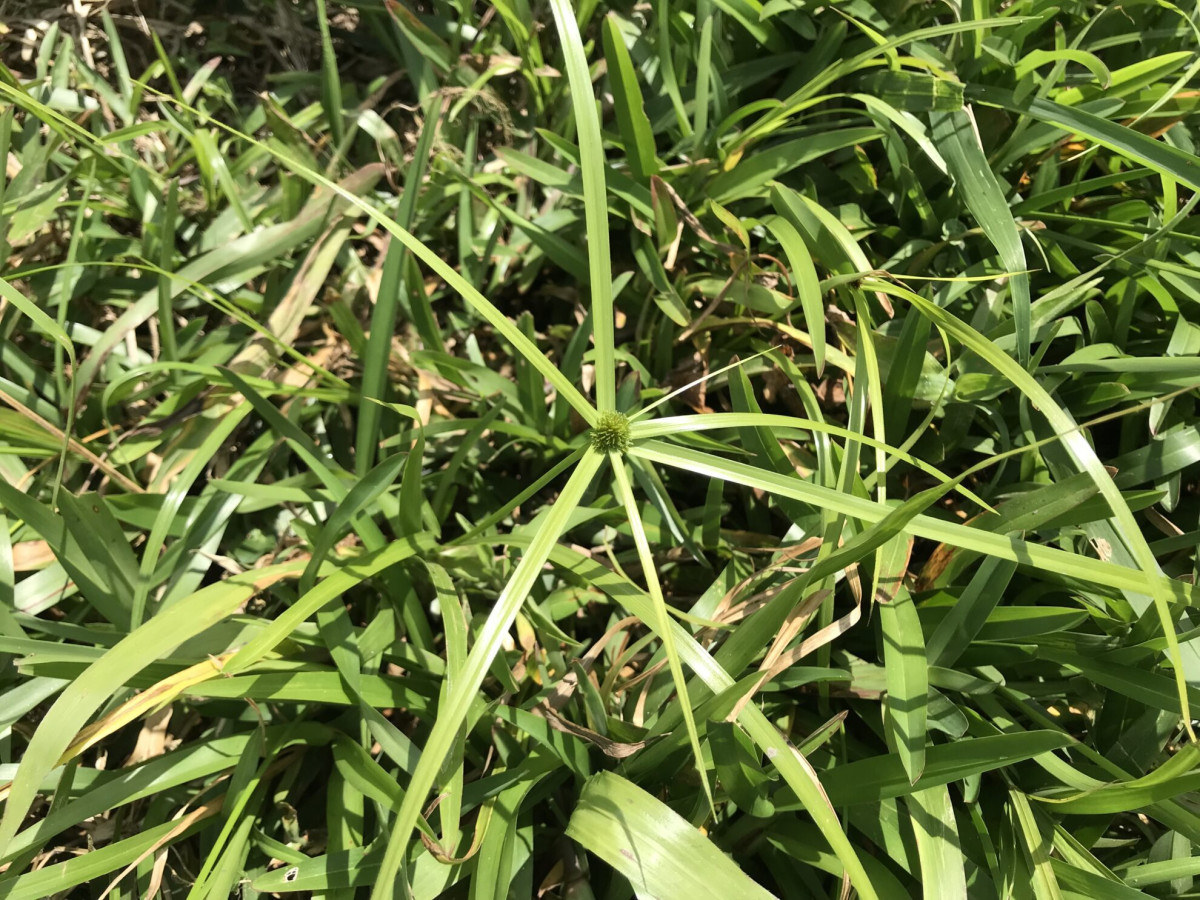
Cyperus aromaticus (Cyperaceae), commonly known as Navua sedge, is a perennial, rhizomatous (a plant with a stem growing horizontally, just below the surface that can produce interspersed roots and shoots creating a root system) sedge native to equatorial Africa and countries in the western Indian Ocean.
It is now recognized as a noxious invasive weed in Southeast Asia and several South Pacific Islands. In Australia, the weed has become an aggressive invader since its introduction to the wet tropical regions of northern Queensland in the 1970s.
Navua sedge has significant negative impacts on native grassland biodiversity and on the beef, dairy and crop farming industries. The sedge is unpalatable and can form dense stands by replacing palatable tropical pasture species. Current management options for controlling this weed rely on chemical and mechanical methods, which are costly, often unsustainable and provide only short-term relief. As a more cost-effective and long-term management solution, Navua sedge has been approved as a target for biological control in Australia.
In 2017, DAF, Australia, initiated a biological control programme against Navua sedge, starting with field surveys in the native range of Kenya, Nigeria and Tanzania to identify natural enemies of this invasive weed.
What is this project doing?
CABI scientists are assessing two fungal pathogens collected from Nigeria and Tanzania for their potential to control Navua sedge. The pathogens currently being investigated are the smut fungus, Cintractia kyllingae, which infects the florets of the inflorescence on Navua sedge, and the rust fungus Puccinia kyllingae-erectae (Uredo kyllingae-erectae), which attacks the leaves and stems of the weed. To effectively control this invasive weed, multiple agents that target different parts of the sedge may be necessary to reduce seed production and limit the weed’s spread.
To evaluate their suitability as biocontrol agents, experiments will be conducted in under quarantine conditions to determine their respective life cycles and infection parameters, including the optimal temperature and dew period for infection.
Host-range testing will be undertaken against selected test plant species to ensure that these pathogens are highly host-specific and do not pose a risk to native Australian plant species. The results will help determine whether these fungal pathogens are safe and effective candidates for introduction into Australia.
Results
The smut pathogen, C. kyllingae, has been imported into CABI’s quarantine facilities where sporidial cultures have been successfully established. A reliable inoculation technique for teliospores and sporidial cultures of the pathogen has been determined, demonstrating successful infection of Australian Navua sedge plants. The flower head stage most susceptible to infection has been identified, along with the most virulent pathogen strain. To confirm host specificity, a total of 37 Australian plant species closely related to Navua sedge will be evaluated in host-range testing.
In parallel, the rust pathogen P. kyllingae-erectae (U. kyllingae-erectae) was also imported from Nigeria and Tanzania. Selected strains from these countries have been shown to cause urediniospore infection in planta on Navua sedge plants from the corresponding countries; however, none of the strains infected the Australian sedge. Following molecular analyses of C. aromaticus herbarium material, a survey was undertaken in Madagascar in 2022, in collaboration with the University of Antananarivo, to source rust strains compatible with Australian Navua sedge.
The survey resulted in the collection of two rust species, P. kyllingae-erectae and a potentially undescribed species. Both were found to be infective to Australian Navua sedge. Following the detection of P. kyllingae-erectae in Australia in August 2023, research efforts shifted towards evaluating the potentially new rust species as a biocontrol agent.
Project Manager

Daisuke Kurose
Project Scientist, Plant Pathologist
Silwood Park, Buckhurst Road, Ascot, Berkshire, SL5 7PY, UK
Partners
Forestry Research Institute of Nigeria
National Herbarium of Tanzania