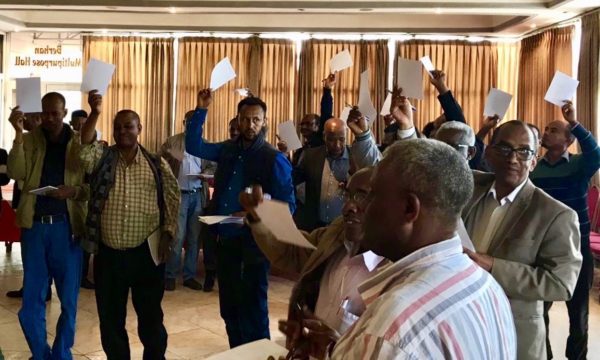
Enabling FAIR data sharing and responsible data use
This project supports stronger, more responsible data practices across Gates Foundation agricultural development investments. It helps project partners apply FAIR (Findable, Accessible, Interoperable and Reusable) data principles in real programme settings so that data can be shared, combined and used more effectively for decision-making.
Building on earlier phases that developed the FAIR Process Framework and practical tools, the latest phase focuses on hands-on implementation. It provides on-demand technical support, mentoring and quality assurance to program officers, grantees and government partners. The project also addresses data governance, policy and infrastructure challenges, including the use of federated data architectures and AI-ready datasets.
By improving how data is managed and accessed, this project aims to increase the value of existing investments, enable better analytics and modelling, and strengthen evidence-based policy and practice in priority countries.
India
Sub-Saharan Africa
United States
Project Overview
So, what’s the problem
Agricultural development projects generate vast amounts of data, yet much of this data remains underused. Collecting and managing data requires significant time and investment, but when data is not FAIR the value is reduced.
Datasets are often difficult to locate, access or combine. This leads to duplication of effort, fragmented evidence and missed opportunities for learning, innovation and better decision-making. Although frameworks and guidance exist, they are not consistently applied in everyday programme workflows, limiting the reuse of data for analytics, modelling and emerging AI applications.
At the same time, many countries are developing agricultural data strategies and digital policies. However, turning these into practical governance arrangements, clear institutional roles and trusted data-sharing mechanisms remains a challenge. Concerns around data ownership, incentives, privacy, risk and value-sharing further restrict access and reuse.
These issues reduce the return on investment from data-rich programmes and slow progress towards more coordinated, evidence-based agricultural systems. Addressing them requires more than new platforms or technologies. It depends on stronger governance, aligned policies, practical tools and targeted support that help partners apply FAIR and responsible practices in real programme settings.
A systems-thinking, people-centred approach is needed to build interoperable, trusted data ecosystems that enable data to be shared responsibly and used to improve agricultural outcomes.
What is this project doing?
Through this project, CABI is strengthening responsible data practices across agricultural development by improving the quality of FAIR implementation and supporting Gates Foundation grantees/partners to apply best practice in real programme settings. This work is progressed by:
1.) Making FAIR measurable and actionable
Rather than providing a single score, the project shows what is missing from a dataset, why it matters and what to improve first. It also develops simple, domain-specific FAIR “recipes” that give researchers clear, step-by-step guidance on what data to collect, how to organize it and how to share it so it can be reused. More information can be found in the Fair Process Framework.
2.) Strengthening trusted data access
The work supports partners and governments to agree clear rules for data access and sharing. This includes defining who can use data, under what conditions, and how risks such as privacy and misuse are managed. It also helps turn national data strategies into practical actions and institutional roles.
3.) Clarifying what “AI-ready” data means
The project defines minimum requirements for AI-ready datasets, clarifies the boundary between FAIR and AI readiness, and prevents unnecessary over-engineering while ensuring data are suitable for modelling and advanced analytics.
4.) Embedding governance into funding decisions
The project explains what extra steps – if any – are needed for data to be suitable for modelling and AI, and where FAIR data are already sufficient. This helps teams avoid unnecessary work while ensuring data quality.
5.) Providing responsive technical support
This includes the delivery of expert reviews, policy analysis, FAIR-readiness assessments, standards and repository recommendations to address emerging challenges across foundation investments. These resources can be found on the Gates Open Research platform.
This project is a continuation of a previous funding phase.
Results
The work is contributing to three main outcomes:
- Improved access to data across agricultural development investments.
- Greater use of the FAIR Process Framework and related tools in programmes and funding processes.
- Increased adoption of data governance recommendations in Ethiopia, Kenya and Nigeria.
Early progress has focused on identifying priority investments and country processes where support can have the greatest impact. Initial technical input has helped shape practical guidance on how to assess data quality, apply FAIR steps and include data requirements in project design.
Support to the 50×2030 initiative is helping partners address delays in releasing survey data by clarifying access rules, strengthening onboarding materials and setting out clear expectations on how data can be shared and reused.
At country level, work on digital agriculture roadmaps is helping move from strategy to implementation. Co-developed governance means that data-sharing rules and roles are being designed jointly with government agencies and stakeholders, rather than externally imposed, increasing ownership and the likelihood that they will be applied.
Next steps include piloting trusted data access approaches, delivering targeted governance recommendations and providing hands-on support to programmes applying FAIR practices. This will generate practical examples of how better data management improves reuse, supports analysis and increases the value of development investments.
Project Manager

Chipo Cosford
Project Manager - Digital Development
CABI, Nosworthy Way, Wallingford, Oxfordshire, OX10 8DE, United Kingdom
Donors
Partners