
Author’s note: This article was written by Dr. Matt Heaton
The UK-CGIAR Centre’s wheat improvement project shares its findings from a dialogue on Genome Editing regulation frameworks with global leaders in the field.
Food systems face a myriad of challenges to produce sufficiently healthy food in the face of climate change. Addressing these problems will require integrated solutions involving changes to management, systems and technologies.
One emerging technology that has been receiving attention recently is genome editing (GE). GE improvement of crops offers a precise way to make more productive, nutritious and sustainable varieties. Unlike genetic modification (GM), many of the resulting crops are indistinguishable from those produced through conventional breeding, and at a fraction of the time and costs.
GE crops therefore offer a way to assist with the transformation of food systems. But these innovations will not achieve impact without enabling policy and regulatory environments granting the production, use and sale of these products. The issue is that GE technology is relatively new, and it is only in the last ten years that countries have started to introduce policies to recognise and govern GE crops. However, the current GE regulatory landscape is shifting rapidly. 34 countries now have frameworks in place to manage GE products, and another 39 are in the process of changing (Figure 1 provides an overview of how the landscape has evolved).
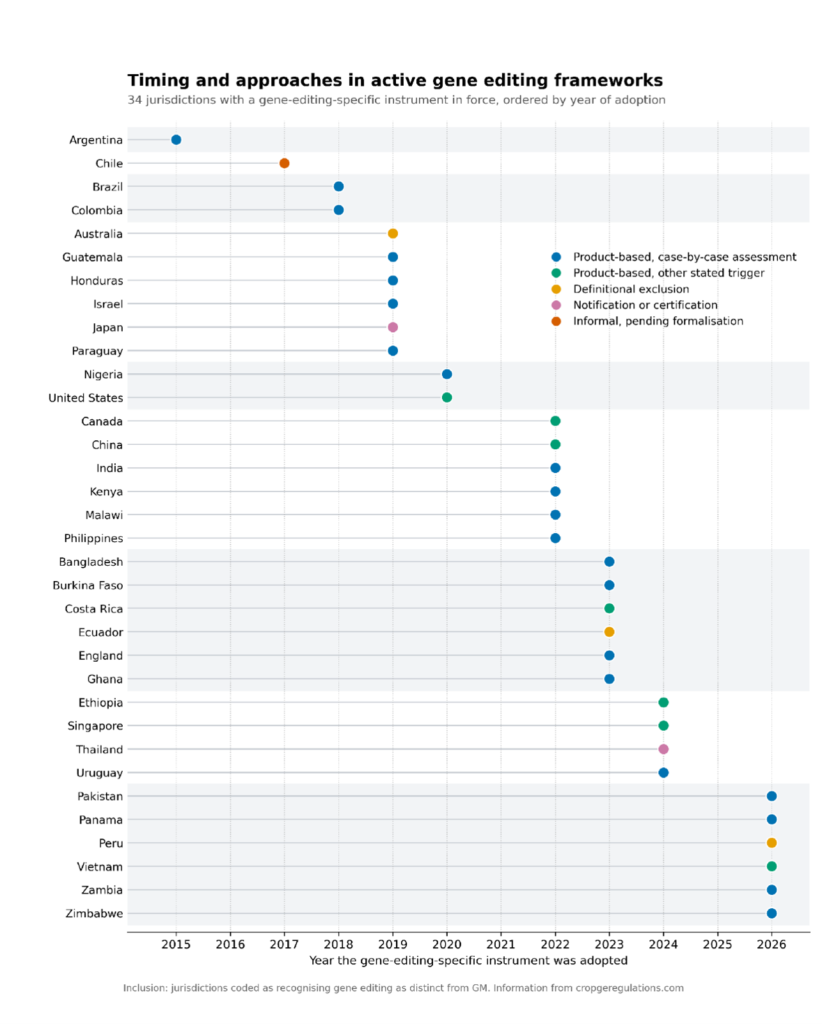
Figure 1: Timing and approaches in active GE regulation.
Argentina became the first country to create a regulatory framework for GE crops in 2015. Several other countries either adopted the same model, made their own version of the Argentinian model or worked within their pre-existing regulatory frameworks for managing plant products. These changes helped create a consensus that transgene-free GE crops should be edited the same way as conventionally bred varieties, while those containing transgenes would follow GM pathways.
However, there are nuances when it comes to where countries draw the line on what to include in GM frameworks. For instance, there are differing views over whether the product of cisgenics – the transfer of genes using GM methods between species which could be conventionally bred – should be classified as a GM product. These subtle differences mean that the same products might be classified differently across jurisdictions, which can create regulatory frictions in the deployment and exchange of GE products.
As more countries bring in GE regulations, the question is increasingly not whether a country permits GE crops, but how they identify these products and how well the approach aligns with other countries, particularly with neighbouring states and trade partners. Understanding these differences can assist policy alignment efforts to maximise societal benefits from GE crops while working across a range of regulatory systems.
For the last three years the UK-CGIAR Centre’s wheat improvement project has been researching the global GE regulatory ecosystem and engaging with key figures in science and policy to help alignment efforts.
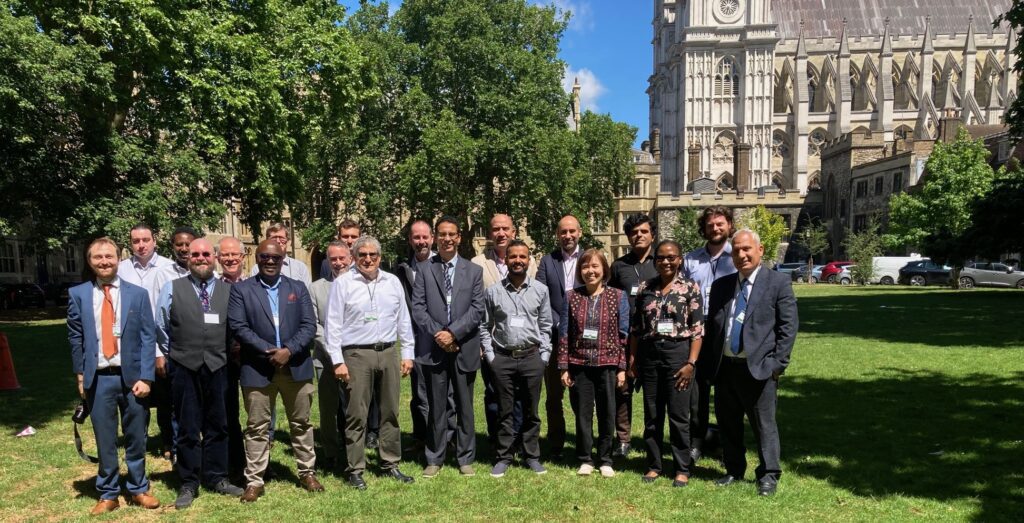
The project convened a mutual policy learning event in June 2026, which brought together representatives from across eight countries to share the latest GE regulatory developments. Participants were a mixture of policymakers, regulators and plant science researchers. The event provided them with a forum to discuss challenges and opportunities when it comes to GE regulation and alignment efforts.
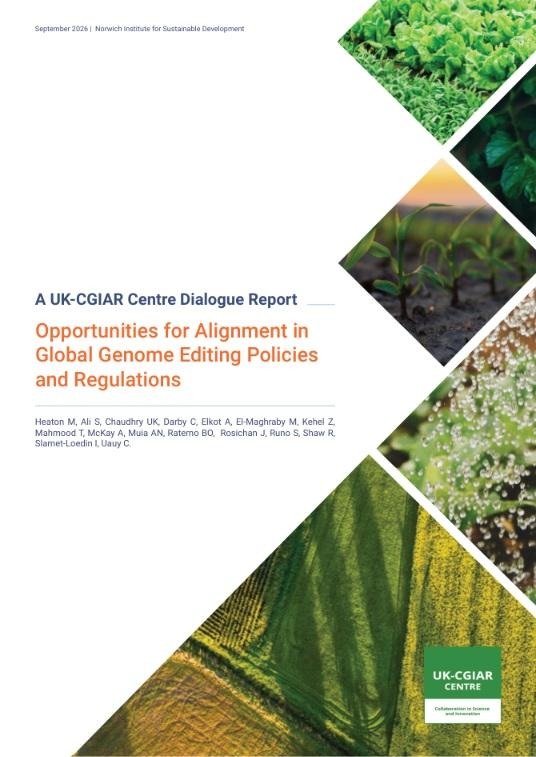
The event findings and recommendations were published in a UK-CGIAR Centre Dialogue Report, titled “Opportunities for Alignment in Global Genome Editing Policies and Regulations”.
The report shares the global context for gene editing regulations and provides a list of recommendations for ongoing alignment efforts. The report is aimed particularly towards researchers, regulators and developers working on GE products.
GE policy alignment efforts have already taken place at regional levels, particularly across Central and South American countries, resulting in coordinated, efficient frameworks for exchange of GE innovations. Using the lessons learned from such initiatives the report offers the following recommendations:
- Establish a cross-disciplinary GE community of practice. More needs to be done to connect up GE networks, involving policy makers, researchers, regulators, businesses, communicators, environmentalists and farmers. The report argues that a community of practice will develop knowledge products essential for improving understanding and support of GE as an important tool for building resilient, nutritious and sustainable food systems.
- Improve monitoring and visibility of GE policies, secondary legislation and the details of these. Some GE regulations are more visible and accessible than others, causing uncertainty and constraining collaboration with technology developers. Open web tools can be used to further improve the accessibility of these regulatory documents and the national regulatory teams involved.
- Improve learning and knowledge exchange around public engagement for GE. Public perception and acceptance of GE products continue to be an area of uncertainty in how best to measure and engage with. Communications strategies must extend beyond the deficit model, recognising that public concerns extend beyond biological understanding. Social media must play a more central role in how GE developments are discussed and shared.
- Investigate options for an international instrument or body to guide policy and regulatory alignment and standards. While international agreements and treaties inform practice around other genetic resources and technologies, no such instrument exists for GE products. Given the widespread changes around GE regulation and the novel nature of the technology, international guidelines or a body should be created to bring clarity, agreement and provide a foundation for policy alignment efforts.
- Learn from regulatory alignment beyond the field of GM. GE regulatory conversations often centre around experiences from the GM regulatory conversations but lessons for regulatory alignment could also be learned from fields such as biocontrol, gene drives, fair trade and forest certification. These include discussion of risk assessment, risk management and labelling of products to signal qualities that are otherwise invisible to consumers. Engaging with these wider regulatory practices and experts could draw on a greater knowledge bed to inform future policy.
Achieving these recommendations and working with governments and partners such as the UK-CGIAR Centre, CGIAR system, AUDA-NEPAD, could help ensure that GE technologies are governed responsibly while enabling their contribution to food security, resilience and sustainable development.
The full report can be found here.
The work took part as part of the “Crop genetic improvement for future climate resilience” project, as part of the UK-CGIAR Centre, managed by Centre for Agriculture and Bioscience International. The workshop was led by the John Innes Centre and Norwich Institute for Sustainable Development.
The UK-CGIAR Centre GE mutual learning event was funded by UK International Development from the UK government; however, the views expressed do not necessarily reflect the UK government’s official policies.
Image credit: Matt Heaton