
Gendered Experiences of Crop Loss in Maize Farming, Kenya
Published: September, 2026
Project report
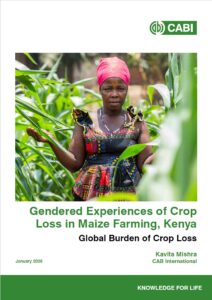
Gendered Experiences of Crop Loss in Maize Farming, Kenya
DOI https://dx.doi.org/10.1079/CABICOMM-62-8201
Type Project report
Language English
Year 2026
Related projects
Global Burden of Crop Loss
Given the pressures of climate change and growing global population, losing less of the crops that have already been sown on land or under cultivation, presents an important opportunity to enhance food security. While there is increasing recognition of potential gains from curbing post-harvest losses and consumer food waste, pre-harvest losses remain poorly understood. The Global Burden of Crop Loss (GBCL) aims to fill this gap by providing trusted, data-driven metrics on crop loss across different regions and crops. By analysing global data, assessing the impact of pests and diseases, and leveraging advanced technology, GBCL aims to equip decision-makers with the insights they need to take evidence-based action. With a clearer picture of where, how, and why crop losses occur, policymakers, researchers, and investors will be better positioned to implement solutions that improve agricultural resilience and food security globally.
Start: 01/04/19 -End: 31/12/27