
Note: This article first featured in the Kirkhouse Trust newsletter.
After the UK–CGIAR Bambara consortium meeting in Cambridge (Feb 2026), Kirkhouse Trust caught up with Dr Yelina to discuss how new tools are building on existing Bambara work.
No reset button needed
For Natasha, working on Bambara groundnut is defined not just by technology, but by collaboration. Her work sits within a growing international effort, bringing together breeders, geneticists and development partners to unlock a crop with huge potential for food and nutrition security. The UK–CGIAR Bambara project is a multi-country consortium creating tools and trials to accelerate improved Bambara varieties for climate resilience and nutrition, joining forces with existing programmes – including Kirkhouse Trust’s Bambara Breeding Initiative (BBI) – and drawing on established breeding networks, germplasm collections and field knowledge.
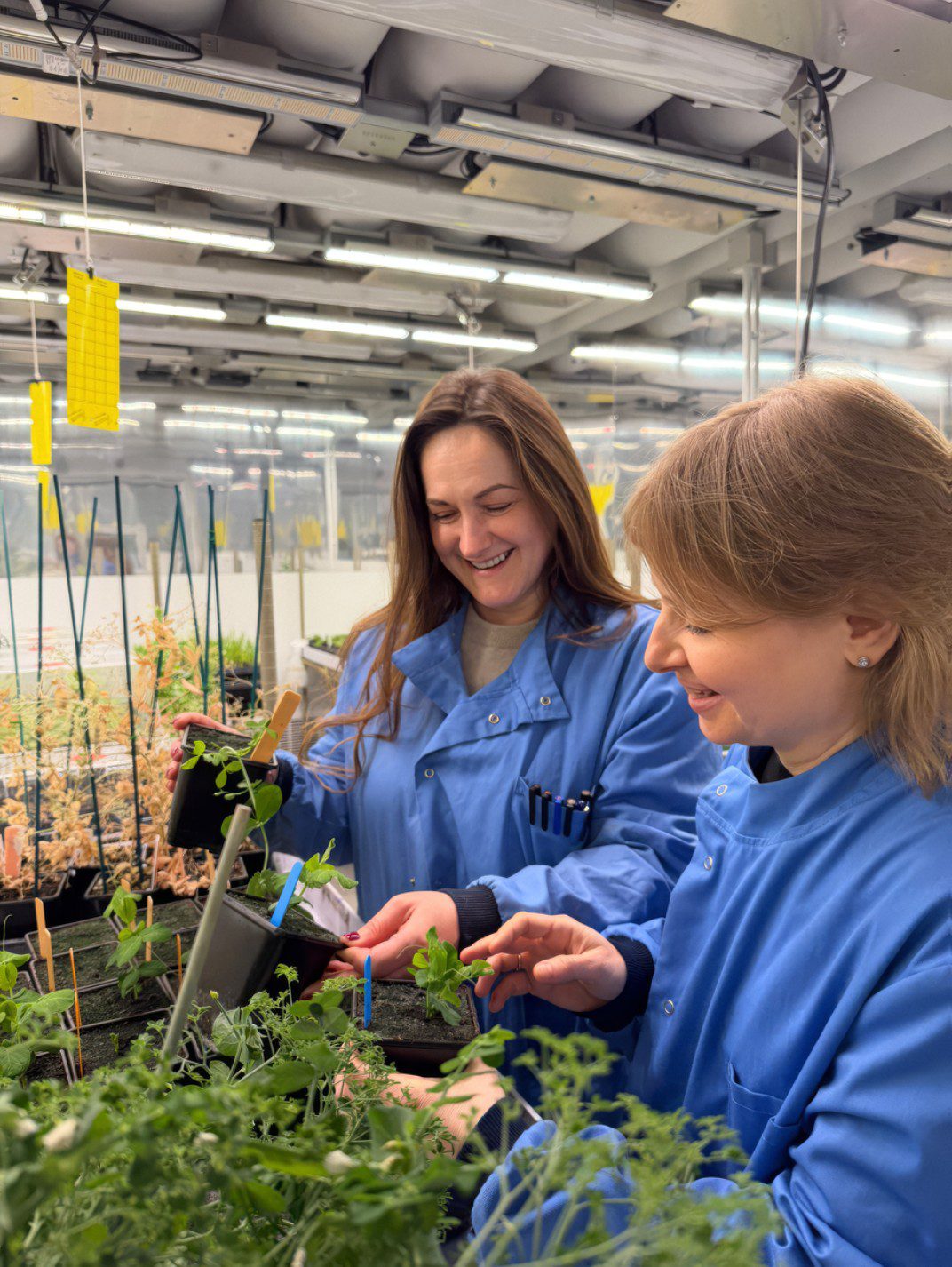
Much of Natasha’s work focuses on precision breeding approaches that enable targeted crop improvement without relying on transgenic techniques. While currently refined using UK crops, the ambition is to apply these tools to Bambara groundnut. In this sense, precision tools act as an enabler, not a substitute. Natasha aims to support researchers and breeders who are already working with a crop that is biologically complex and historically under-resourced.
Carrying the knowledge forward
Elena Bidash, who began the project as a PhD student and is now continuing as a postdoctoral researcher, plays a key role in translating the precision breeding pipeline from UK systems to Bambara groundnut – helping to bridge laboratory innovation with global application.
Becoming part of something bigger
Working together has been one of the most transformative elements of the work. That approach comes to life most clearly when collaborators are able to connect face to face. For Natasha, conversations at the consortium meeting in Cambridge were “invaluable”, reinforcing how shared effort helps turn scientific ambition into practical outcomes for farmers. Phil Howell highlighted the simple, practical points shared by Presidor Kendabie, noting that they would “save a great deal of unnecessary trial and error” in crop development.
This sense of collective responsibility was echoed by Sean Mayes, Professor at the University of Nottingham and a consultant to Kirkhouse Trust, who described the meeting as “a very positive step towards building a strong research community, dedicated to realising the potential of Bambara groundnut for farmers around the world.
Sharing the tools for change
While the science behind precision breeding is ambitious, Natasha’s long-term vision extends beyond new technologies: “If we can successfully apply this technology to Bambara, the real goal is to share it. To train scientists in Africa so they can use these tools themselves.” Building local capacity is key to sustained impact. “If a trait is controlled by a single gene, they could edit it themselves, ” Natasha explains. “That’s when you start to see real, lasting impact. ” Although still at an early stage, the momentum is clear.”
Image credit: Lauren Eddie.