
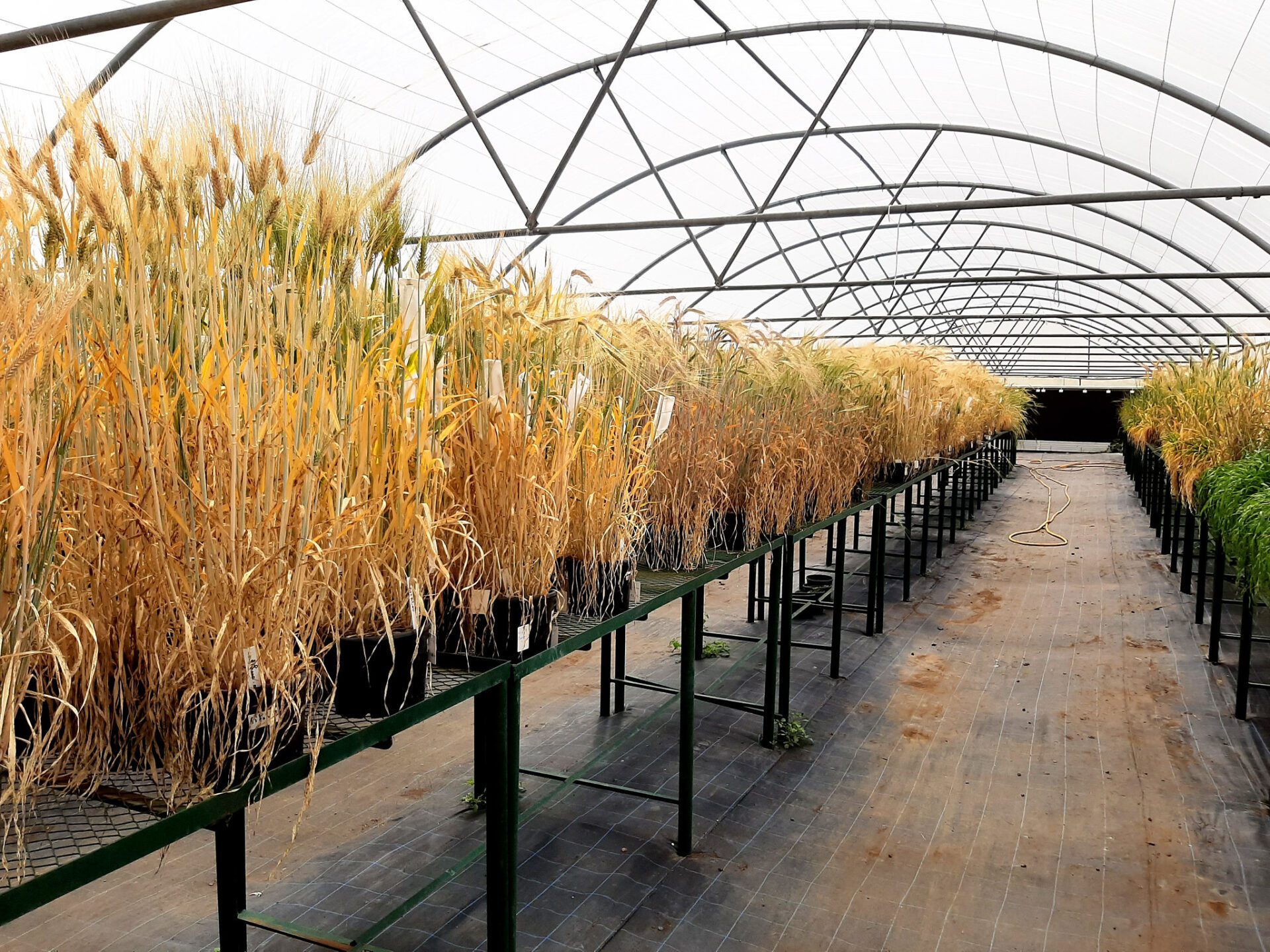
Researchers on the UK-CGIAR Centre’s wheat enhancement project launch new tool to track commercial release of genome-edited products.
Researchers from the UK-CGIAR Centre’s wheat enhancement project have launched a new online web application that allows uses to track the release of genome-edited (GE) crops globally. The new tool builds on the cropgeregulations.com website, launched earlier this year by the same team, which provides a leading resource to track crop GE regulatory change, with links to key bodies and relevant documentation. The new GE crop product tracker builds on this platform by allowing users to explore the range of GE-derived products entering the market, along with further details, such as the changes made and where these innovations have been approved.
Creator of the GE product tracker, Deima Daujotaite of the Norwich Institute for Sustainable Development (NISD) said, “it is important to make the information regarding commercialisation of GE crops easily accessible. Information on these products does exist, but it is scattered across the internet, making it difficult to follow. Our tool collates this information and makes it much more accessible for the wider community to follow and feed into.”
Regulatory change driving new product release
GE crop regulations have seen global change in the last 10 years, with 34 countries now recognising these products distinctly. The result of these changes has been the release of improved products, such as tomatoes rich in compounds which reduce blood pressure, legumes that are easier for livestock to digest, bananas that do not bruise as easily and better tasting greens. Products such these demonstrate the broad potential GE improvements offer crop breeding and there is increasing interest in tracking the release of new products.
Dr Matt Heaton, a research fellow at the NISD who leads the Genome Editing Regulations Tracker, said: “our regulatory tracker made it easier to understand how genome editing is governed, which led stakeholders to wonder which GE innovations are reaching markets. It turned out this question was surprisingly tricky to answer, so we made a new tool to fix this gap. It is no longer hard to keep up to date with the latest GE crops entering the market.”
Dr. Godfrey M. Ngure, a Senior Program Officer at ISAAA AfriCenter who helped develop the tracker, said, “what started as regulatory maps now shows the actual products. Regulations tell us what’s possible. Products tell us what’s happening. For the policymakers, regulators, scientists, and members of the public that ISAAA AfriCenter engages with across Africa, seeing which genome-edited crops have actually reached the market is invaluable evidence, and we hope this tool becomes a shared reference point for the whole community”
Using the tool
Users can also explore products by:
Technique: the genome editing method used to create the crop.
Commercial status: how far each crop has progressed in the countries where it is approved, whether marketed or approved for commercialisation but not yet on shelves.
Crop type: the plant species each innovation was developed from.
Crop trait: the type of trait the edit was designed to improve.
Each marker on the product tracker shows the developer behind a product. Selecting a marker brings up a description of the crop, the developer, the editing technique used and the countries where it has been cleared for commercial release, with links to the evidence for each approval. A timeline bar at the bottom of the map shows when each product appeared, allowing users to browse these releases over time.
Development and future
A prototype of the tool was first presented at the Precision Breeding Conference at Norwich Research Park, organised by the John Innes Centre, where it received feedback from leading experts in the field. It was then released publicly in October 2026. The tool will continue to be updated by the website team and in response to feedback from users.
“This is a fast-moving space and there’s potential for us to miss GE crop products that have received clearance for commercial release,” said Dr Heaton “the team’s ambition is for the tracker to become a community platform, maintained together by the people who use it. So, if you see we are missing something, please reach out to us.”
Suggestions for missing products, corrections or sources can be submitted at the site’s contact page.
This work was made possible by the UK-CGIAR Centre, led by CABI and funded by the UK Foreign, Commonwealth and Development Office (FCDO).
Image credit: ICARDA.