
Note: this article was written by Dr. Awais Rasheed and Dr. Samar Naseer.
The UK-CGIAR Centre’s wheat improvement project has been building partnerships in Pakistan to improve food and nutritional security through enhanced wheat varieties.
Wheat breeding research in Pakistan has always been a top priority for the country’s agricultural Research and Development sector. Pakistan is in the top tier of per capita wheat consuming countries in the world. The crop in the country is cultivated on ~9 million hectares, providing staple foods for over 220 million people. However, certain hurdles stand in the way of maximizing food and nutritional security in the country. A major challenge is the threat of wheat diseases, especially yellow rust. Pakistan’s foothills are in the Himalayan region, which is known as a hotspot for new and aggressive types of yellow rust pathogen. These strains can cross international boundaries and could have devastating impacts on regional and even global wheat yields.
Another major challenge is low nutritional quality in grain, which has made developing yields with higher levels of iron and zinc a ‘hot pursuit’. Indeed, ensuring nutritional security has become a matter of national importance in Pakistan. The National Nutritional Survey (2019) indicated that 43% women of reproductive age and 49% of children are affected by iron deficiency anaemia (IDA). Wheat, being a staple food, could contribute meaningfully to addressing this problem if it is fortified with higher grain iron contents using new breeding technologies.
Thus, screening newly developed wheat varieties in Pakistan could provide insights before novel germplasm is deployed globally. Researchers on the UK-CGIAR Centre’s wheat improvement project have been working towards breeding disease resistant and nutritious wheat varieties suited for environments like Pakistan.
“The concept of healthy and nutritious wheat i.e., healthy wheat plants (free from diseases and insects/pests) providing health benefits is becoming more realistic by implanting multiple traits using new breeding technologies”, said Professor Awais Rasheed, from Quaid-i-Azam University (QAU), Pakistan, who is the lead researcher from Pakistan in this UK-CGAIR Centre commissioned project.
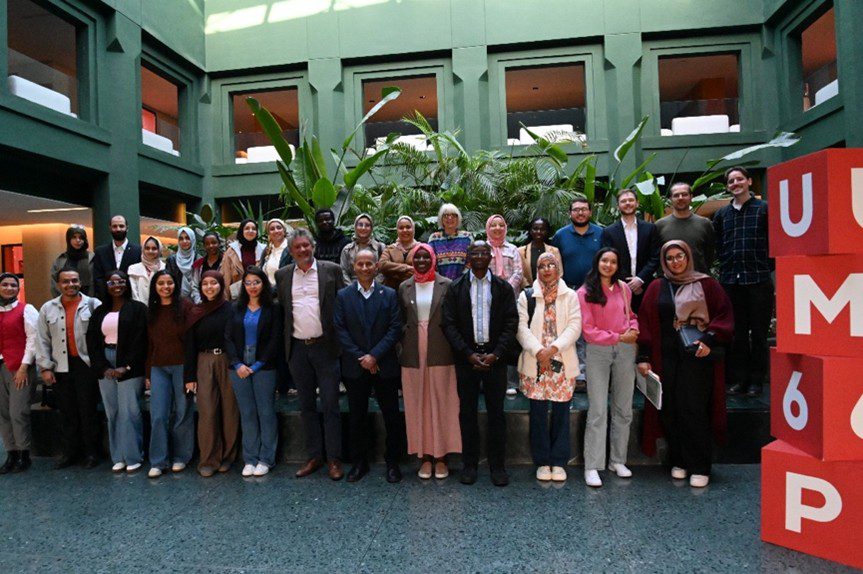
This project brought together technologies and expertise of CGIAR centres, UK research institutes and partners in the Global South. The UK-CGIAR Centre project was a multi-faceted and holistic move to influence four key areas of wheat Research and Development in Pakistan.
Germplasm & breeding innovation
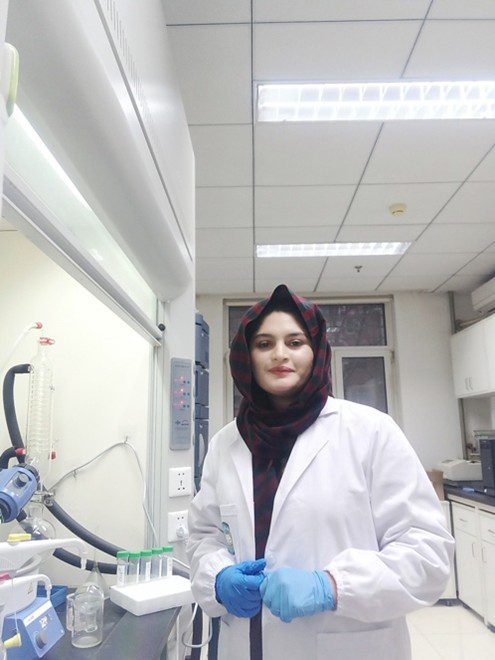
Due to the increasing acceptability and changing regulatory situation of gene edited products, the project harnessed precision breeding technology to develop high iron wheat varieties. The UK-CGIAR Centre project provided impetus to the work of Dr. Samar Naseer who when working on the project was a visiting PhD student at the John Innes Centre, UK under the supervision of Professor Janneke Balk.
“I was working on biofortification of wheat for grain iron content and was eager to contribute meaningfully to combat the global issue of malnutrition through the precise editing of a negative regulator of iron homeostasis gene, and this project helped my efforts in developing high iron gene edited lines”, said Dr Samar Naseer, who is now a lecturer at Allama Iqbal Open University, Islamabad.
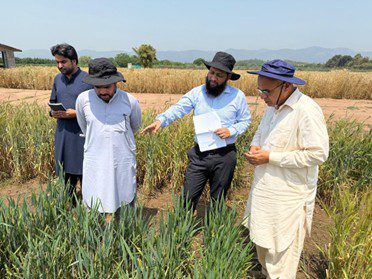
These lines are ready and awaiting field trials in Pakistan, which will take place during the third year of the project. A suite of rust resistant wheat lines for testing was introduced into Pakistan as part of this project, which showed excellent levels of resistance in the field. The lines were developed by Professor Diane Saunders, Head of the Crop Genetics department at JIC. “These lines could contribute as a breeding source for wheat National Agricultural Research and Extension Systems in Pakistan and will be followed by another suite of wheat lines that will be tested in Pakistan in future”, said Prof. Diane Saunders.
Capacity building by mentoring students and early career researchers
One of the integral parts of the project was to build the capacity of students and early career researchers through training and mentorship. “I started gene editing research at JIC during my PhD. Then this UK-CGIAR project provided me with a transformative experience that boosted my research progress, shaped my research direction, expanded my global network, and strengthened my identity as a scientist,” said Dr. Naseer.
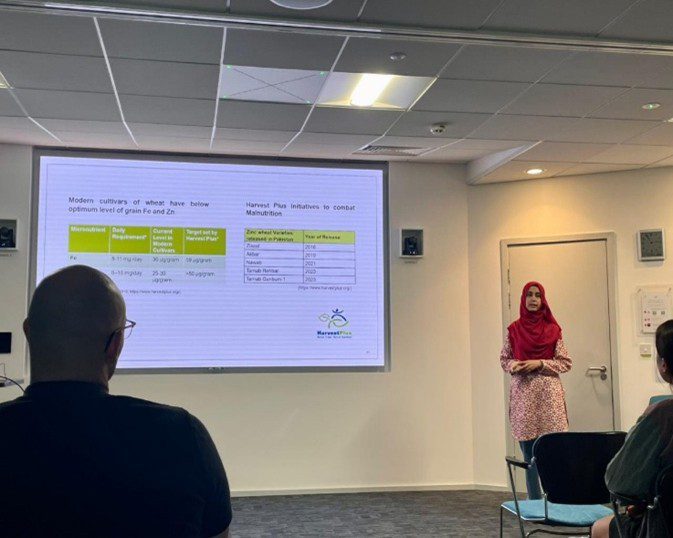
The project also supported the PhD research of Ms. Humaira Qayyum, a young female scientist, who is working on the transcriptomics of a high-iron wheat cultivars to discover genes and develop markers for breeding. “The strikingly high proportion of iron deficiency among Pakistani women has always motivated me to find new ways to address this challenge, and the support provided by UK-CGIAR project helped me to take a leap forward in tackling this challenge,” said Ms. Humaira Qayyum.
What’s more, the project supported two students, Kainat Abbasi and Youshaa Danyal, from QAU to participate in the AfriPlantSci2025 course in Morocco during November 2025. The course not only offered technical training in genome editing, bioinformatics, and molecular breeding, but also provided training on essential professional skills such as policy engagement, gender-responsive research, leadership, and science communication. The lectures from the international experts, hands-on laboratory sessions, and group activities created a dynamic learning environment. Beyond providing technical skills, the course offered a platform for networking, developing research collaborations, and forming professional connections.
Mutual learning on genome editing policy
A unique aspect of the project was engaging with policy leaders from Pakistan to learn about new and ongoing developments in the regulation of precision breeding technologies. “It’s great to see Pakistan streamlining the regulation of genome editing to enable faster and more bespoke crop improvement to support farmers and consumers”, said Dr. Matthew Heaton, from Norwich Institute for Sustainable Development.
“Unlike genetic modification which introduces new genes, gene editing can alter the plant’s own gene to improve its performance. Therefore, the new Biotechnology policy comprehensively deals with such modifications, and new policy will be implemented soon after formal approval”, said Dr. Shaukat Ali, policy lead and Director of National Institute of Genomics and Biotechnology (NIGAB), Pakistan.
Global partnerships for innovation
The UK-CGIAR Centre project not only provided the opportunity for science centre in the Global South to partner with UK research institutes but also provided a catalyst for south-south partnerships. Scientists from Pakistan, Egypt and Kenya were brought together and given the opportunities to screen wheat varieties in respective countries for disease resistance stability. This opened up new opportunities for collaboration. As part of the broader project, TILLING mutants and genome edited lines were evaluated for rust resistance in Kenya, by KALRO and CIMMYT, and in Egypt, through the Agricultural Research Centre and ICARDA. Genome edited lines for high iron will be tested in Pakistan, and with partners in Kenya and Egypt. Overall, the UK-CGIAR project contributed to wheat breeding innovation in Pakistan, brought together international partnership and supported the next generation of scientists.