
The AgVACS project has created a cutting edge, multi‑metric tool for designing and evaluating cereal–legume systems.
The ICoN (Interactive Co-design of on-farm experimental Networks) tool has been developed as part of the AgVACS project (Climate-Smart Agronomy Vision for Adapted Crops and Soils)within the UK-CGIAR Centre programme. The project is a strategic partnership between Rothamsted Research, University of Nottingham, University of Warwick, International Institute of Tropical Agriculture (IITA), Alliance of Bioversity International and CIAT (ABC), the Council for Scientific and Industrial Research–Savanna Agricultural Research Institute (CSIR–SARI), and Bayero University Kano (BUK). A central aim of AgVACS is to recruit farmers into an experimental network to evaluate the benefits of new cropping systems that make use of Vision for Adapted Crops and Soils (VACS) crops.
The importance of participatory research in agricultural innovation has been recognised for at least forty years, notably since Robert Chambers’ influential book Rural Development: Putting the Last First. On-farm experiments are a key component of this approach. In the AgVACS project, we aim to work directly with rural communities in Ghana and Nigeria to trial new cropping systems and to encourage farmers to participate in coordinated experimental networks. Like many previous researchers (e.g. Gladwin et al., 2002), we believe that sound statistical principles can be applied to participatory on-farm experiments. This ensures that the resulting data can support reliable and robust conclusions. The ICoN tool has been developed to support this goal.
It is often noted that a statistically significant experimental result is not necessarily practically significant. In agriculture, practical significance means that the benefits of a new variety or cropping system are large enough to justify the additional costs, effort, and risk involved in adopting it. These costs may include additional inputs, changes in management practices, and the time required to learn new techniques.
To ensure that experiments can detect benefits that are genuinely meaningful to farmers, they must be designed with sufficient statistical power. Statistical power is the probability that an experiment will detect a benefit of a specified size, if that benefit truly exists. Researchers typically aim for a power of at least 80%, meaning there is a high chance of detecting effects that are practically important despite natural variability in crops, soils, and farming conditions.
In addition to detecting whether an effect exists, it is also important to estimate the size of that effect with reasonable precision. This is particularly important when making recommendations to farmer groups, policymakers, or commercial partners. Experimental results always involve some uncertainty, which is commonly expressed using a confidence interval. A narrower confidence interval indicates greater precision and provides greater confidence in the estimated benefits.
In previous work, members of the AgVACS team developed methods to calculate the statistical power and precision of different experimental designs using data from earlier trials (Lark et al., 2025). These methods have now been incorporated into the ICoN tool, making them accessible to project partners and other users. The tool has been developed as an R Shiny web application, meaning it can be accessed through a web browser without specialised software.
The tool uses data from the Carob database, which contains results from many agricultural trials conducted by CGIAR centers and partner organisations. The current version of the ICoN tool supports experimental design for cowpea and groundnut trials in districts of Ghana.
Users can select a crop and district, and specify the size of the yield benefit that would be considered practically meaningful. They can then explore alternative experimental designs by adjusting key features such as:
- the number of farmers participating in each local experimental cluster,
- the number of replicated plots managed by each farmer, and
- the number of clusters included in the network.
Cluster locations are selected using a random sampling approach. This hierarchical experimental structure is illustrated in Figure 1.
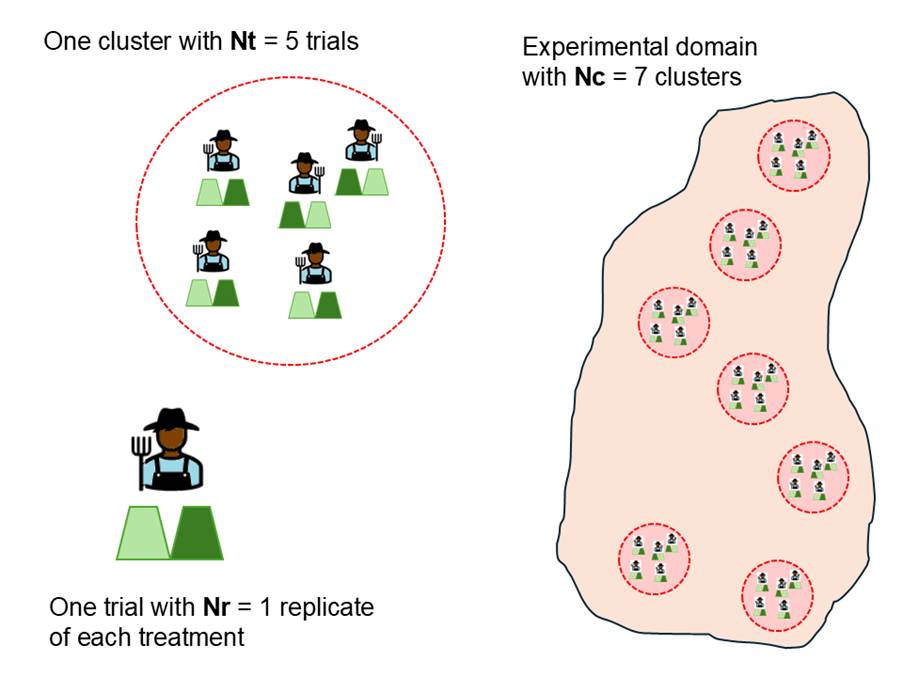
Figure 1: Hierarchical structure of a Hub1 experiment, as described for the ICoN
For each design, the tool calculates the statistical power to detect the specified treatment effect and shows the expected precision of the estimated effect, expressed through the width of its confidence interval. This allows users to design experiments that are both feasible and capable of producing reliable, useful results.
A link to the tool is provided below, and full guidance notes are available here. An online video demonstrates the tool in action. Feedback on the tool and ideas for development would be gratefully received by email at murray.lark@nottingham.ac.uk

Author bio
Murray Lark is Professor in Environmetrics at the University of Nottingham.
Further reading
Chambers, R. 1983 Rural Development: Putting the Last First. Longman, London
Gladwin, C., Peterson, J. & Mwale, A. 2002. The quality of science in participatory research: a case study from eastern Zambia. World Development 30, 523–543. https://doi.org/10.1016/S0305-750X(02)00002-5
Lark, R.M., Manzeke-Kangara, M.G., Kihara, J.M. & Broadley, M.R. 2025. The design of on-farm trials for agricultural development: a case study on interventions to improve micronutrient status of grain crops. npj Sustainable Agriculture. 3:58. https://doi.org/10.1038/s44264-025-00101-0
Online video