Overview
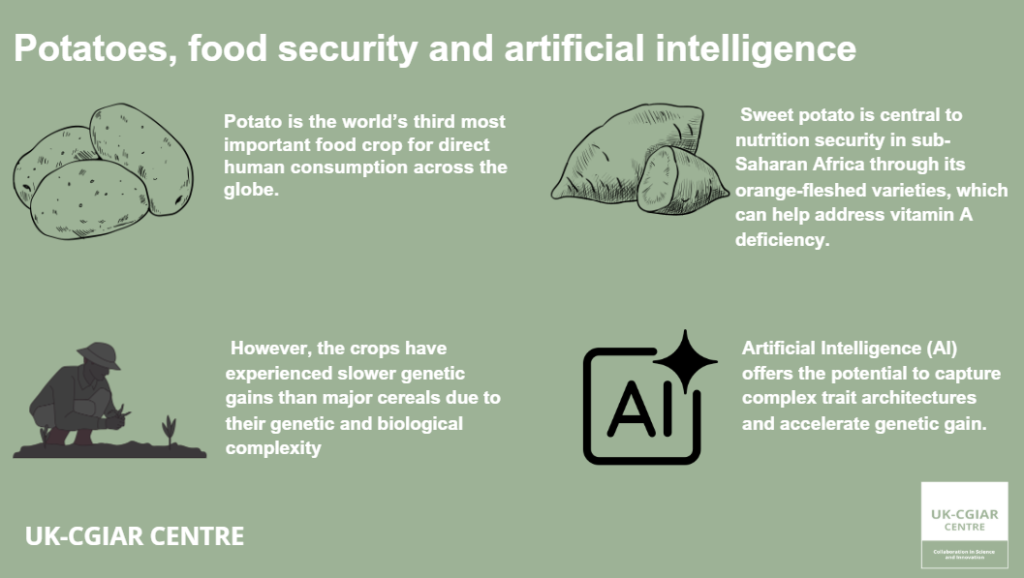
Potato is the world’s third most important food crop for direct human consumption across the globe. Sweet potato is central to nutrition security in sub-Saharan Africa through its orange-fleshed varieties, which can help address vitamin A deficiency. However, the crops have experienced slower genetic gains than major cereals due to their genetic and biological complexity. For both potato and sweet potato, the breeding cycles are long and varietal turnover slow. What’s more, gains in yield stability, nutritional and consumer-preferred quality, as well as durable disease resistance remain incremental. Threats such climate change, evolving pests, and emerging diseases are advancing faster than conventional crop breeding can keep up. This growing gap threatens farmer livelihoods, food security, and nutrition, especially in vulnerable regions such as sub-Saharan Africa.
Artificial Intelligence (AI) offers the potential to capture complex trait architectures and accelerate genetic gain. Yet AI integration remains constrained by data fragmentation, interoperability challenges and limited digital capacity within breeding systems. By integrating AI-enabled predictive breeding, AI-guided gene editing prioritisation, interoperable FAIR data systems and inclusive capacity strengthening, the scientists on this project will work together to help accelerate the process of creating new climate-ready cultivars that meet smallholder farmers’ needs in low- and middle-income countries.
Objectives and activities
The project teams will use advanced AI models to predict which crop varieties will perform best under climate stress; identify stronger, more durable disease resistance; and improve breeding efficiency while reducing development timelines. By unlocking insights from large genomic, environmental, and field datasets, AI can significantly shorten the time required to develop and release improved varieties, ensuring farmers have access to better crops sooner.
The problem
Partners
UK
The James Hutton Institute (JHI)
CGIAR
International Potato Center (CIP)
Local partners
Kenya Agricultural and Livestock Research Organization
Egerton University
Where the research teams will work
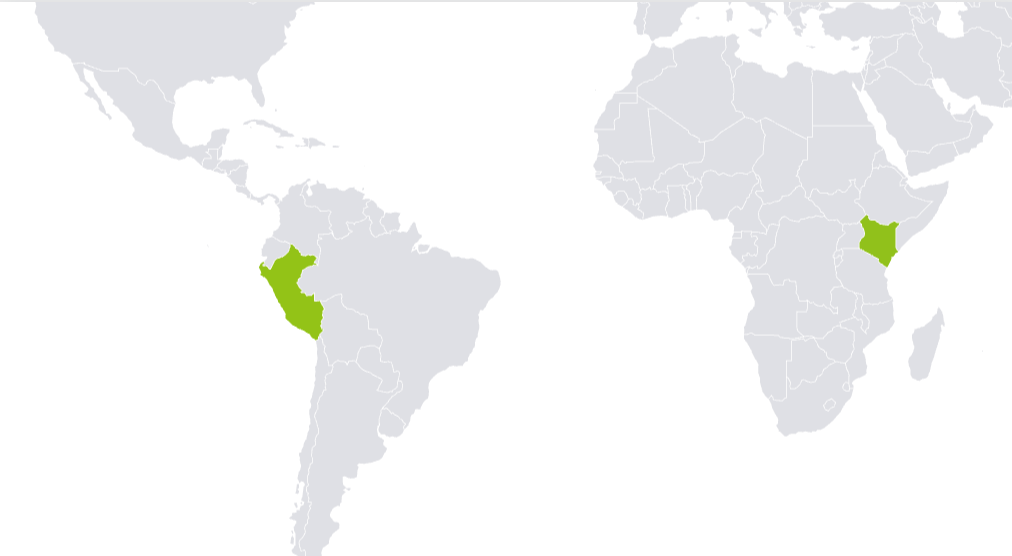
The project will be implemented with NARS partners in Kenya in close partnership and collaboration with CIP HQ in Peru, CIP Kenya office and the JHI.